What is Dynamic Range?
Simply put, dynamic range is the difference between the loudest peak and the quietest moment in an audio signal. A wide dynamic range means there is a significant contrast between these levels, allowing for more expressive and natural-sounding audio. Conversely, a narrow dynamic range compresses these differences, often leading to a louder but potentially less dynamic sound.
The Dance of Punch and Sustain
In the context of mixing, punch refers to the initial transient impact of a sound, like the snap of a snare drum or the attack of a plucked guitar string. It is the immediate, energetic burst that gives sounds their perceived impact and helps them cut through a mix. Sustain, on the other hand, is the lingering body and decay of a sound after its initial attack. Think of the resonant ring of a cymbal or the prolonged tail of a vocal note.
These two elements often exist in a delicate balance. Enhancing one too much can inadvertently diminish the other. For instance, too much sustain can make a mix feel muddy and lose its rhythmic drive, while excessive punch without adequate sustain can leave sounds feeling thin and disconnected.
Achieving a compelling mix involves skillfully balancing the transient impact and the lingering presence of sounds.
Tools for Dynamic Control
The primary tools for shaping dynamic range are compressors and transient shapers. Compressors reduce the dynamic range by lowering the volume of signals that exceed a certain threshold. By carefully adjusting parameters like attack, release, ratio, and threshold, you can control how much of the initial punch is preserved or reduced, and how much the sustain is brought forward. For a deeper understanding of how these settings affect your sound, explore Understanding Compression Ratios From Subtle Glue To Aggressive Punch.
Transient shapers offer more direct control over the attack and sustain phases of a sound. These tools allow you to boost or cut the initial transient, making sounds punchier or softer, and similarly enhance or reduce the sustain, giving you precise control over the envelope of individual sounds.
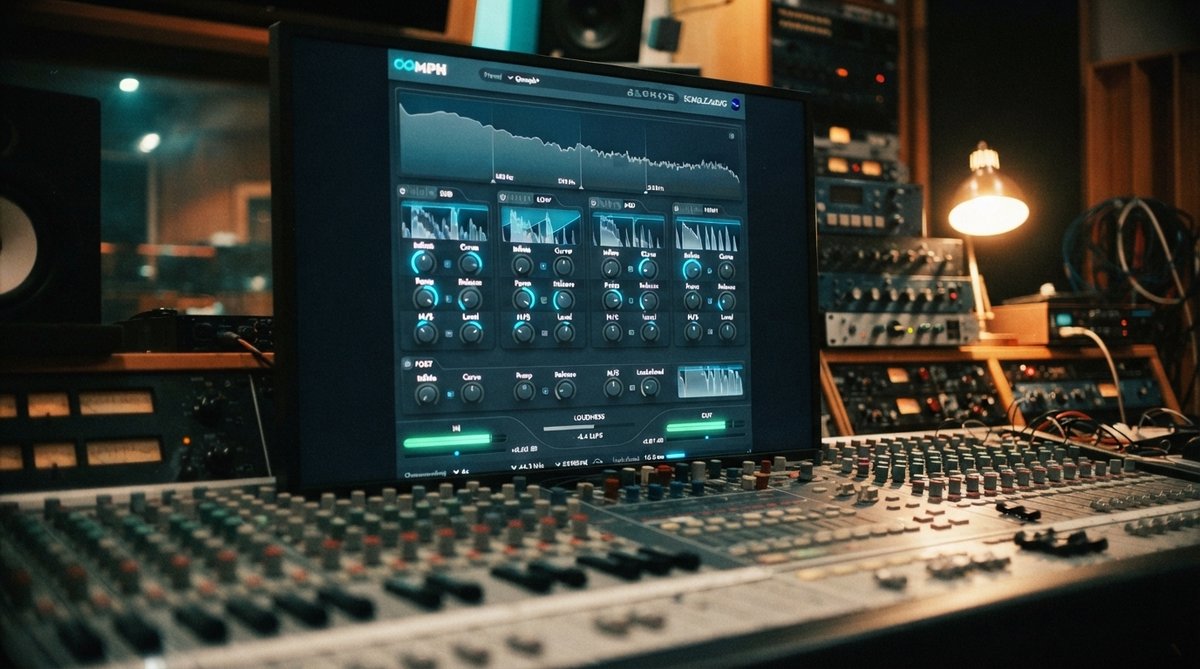
For more intricate control, especially across different frequency bands, multiband dynamics processors are invaluable. A plugin like OOMPH allows you to split the audio signal into flexible frequency bands, letting you independently enhance the saturation, balance, dynamics, and stereo width of specific frequency zones. This is incredibly powerful for fine-tuning the punch and sustain of different elements within a sound or across your entire mix. You can boost the punch of a kick drum's low-mid transient without affecting the vocal's sustain in the upper mids, for example. Learn more about this technique in Mastering Multiband Dynamics Shaping Your Mix With Frequency Specific Control.
Visualizing Dynamics for Precision
While your ears are the ultimate judge, visual feedback can significantly enhance your ability to make informed dynamic processing decisions. An oscilloscope, such as Oszillos Mega Scope, displays your audio waveforms in real time. This allows you to visually inspect transients, observe how your compressor's attack and release settings are affecting the waveform, and fine-tune your dynamic processors with precision. It is an indispensable tool for seeing exactly what your processing is doing, especially when working with drums or bass. For more on this, check out [LINK:unlock-the-power-of-audio-analysis-with-oszillos-mega-scope] and Mastering Drum Transients Visualizing Your Drum Programming For Impact And Groove.
Similarly, a spectrum analyzer like Spectrum 2 helps you see the frequency content of your mix and how dynamics impact it. You can identify if excessive sustain in one frequency area is masking other elements or if a lack of punch is due to an imbalance in a specific band. This visual insight can guide your multiband dynamic processing and EQ decisions. For detailed guidance, read Beyond The Ears Using A Spectrum Analyzer For Precise Eq Decisions.
Visualizing your audio's dynamic behavior offers crucial insights that your ears alone might miss, guiding more precise mixing decisions.
Dynamic Range in Mastering
In mastering, the goal shifts to optimizing the overall dynamic range of the complete mix for distribution, ensuring consistent loudness while preserving the musicality and impact you carefully crafted. This often involves gentle compression and limiting to achieve target loudness levels without crushing the life out of the track. Understanding the relationship between perceived loudness and peak levels is vital here. You can learn more about this balance in The Psychology Of Loudness Perceived Volume Vs Peak Levels In Mixing and Optimizing Your Mix For Streaming Platforms Loudness And True Peak.
The mastering stage is where the final touches are applied to ensure your mix translates well across various playback systems. Effective gain staging throughout your entire production process is also critical for maintaining dynamic integrity. Consider exploring The Art Of Mastering Gain Staging Keeping Your Signal Clean and Glue Your Mix Advanced Bus Processing For Cohesion And Macro Tone Shaping for broader mix cohesion.
Conclusion
Mastering dynamic range is an ongoing craft, requiring a blend of technical understanding and artistic judgment. By understanding the interplay between punch and sustain, and utilizing the right tools and visual aids, you can sculpt mixes that are both powerful and nuanced, captivating your listeners with their clarity and impact.