Understanding Dynamic Range and Compression's Role
Dynamic range refers to the difference between the loudest and quietest parts of an audio signal. A healthy dynamic range gives music its energy and emotional impact. Compression reduces this range by lowering the level of loud signals and/or raising the level of quiet signals, making the audio more consistent. While useful for controlling unruly transients or creating a sense of glue, excessive compression flattens the sound, removing impact and making everything sound uniformly loud. This can be particularly noticeable in mastering or when dealing with poorly mixed source material.
Over-compression can strip audio of its natural dynamics, leaving it sounding flat and lifeless.
What is Dynamic Range Expansion?
Expansion is essentially the opposite of compression. Instead of reducing dynamic range, it increases it. There are two main types of expansion:
- Downward Expansion (Gating): This makes quiet signals even quieter, or silences them entirely, below a certain threshold. It is commonly used for noise reduction or to create rhythmic effects. Think of a noise gate that closes when the signal drops below a set level. You can read more about compression ratios and their impact on dynamics in Understanding Compression Ratios From Subtle Glue To Aggressive Punch.
- Upward Expansion: This makes loud signals even louder, or raises the level of signals above a certain threshold. This is often the type of expansion we use when trying to restore life to over-compressed audio, as it helps to emphasize transients and bring back the natural punch and impact that may have been lost. It can also be thought of as a transient designer, making the attack portion of sounds more pronounced.
Applying Expansion for Audio Restoration
When dealing with audio that feels squashed, expansion can be a lifesaver. The key is to apply it judiciously. You are not trying to undo the compression entirely, but rather to reintroduce some natural movement and punch. Here's a practical approach:
- Identify the Problem Frequencies: Often, over-compression affects certain frequency ranges more than others. A spectrum analyzer like Spectrum 2 can help you identify which parts of the frequency spectrum have lost their dynamics. Look for areas where the difference between peaks and valleys is minimal. For a deeper dive into spectral balance, check out The Art Of Spectral Balance How To Achieve A Professional Sounding Mix.
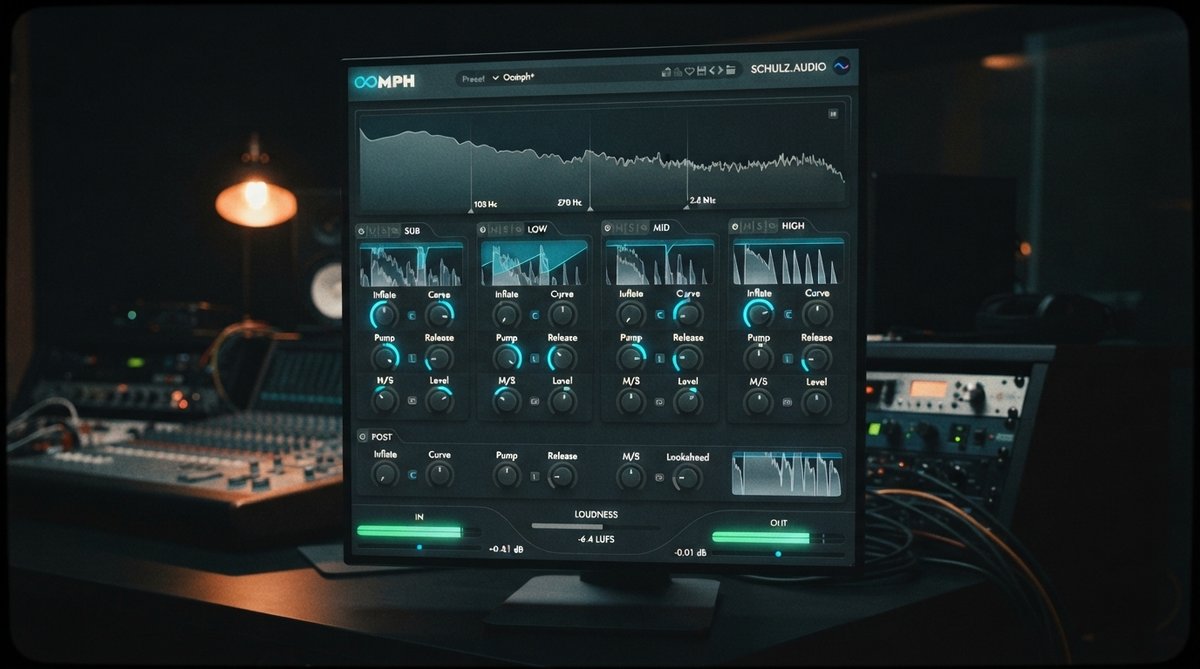
- Multiband Expansion: This is where the real power lies for audio restoration. A multiband expander allows you to apply expansion selectively to different frequency bands. For instance, you might find that your drums need more punch in the low-mids, or vocals need more clarity in the upper-mids. This targeted approach prevents over-expanding other areas that might already have healthy dynamics. OOMPH is designed as a multi-band dynamic enhancement plugin, allowing you to split the audio signal into four flexible bands and independently enhance their dynamics. This makes it ideal for precisely targeting and restoring the punch and impact of specific frequency zones.
- Visualize Your Dynamics: An oscilloscope can be incredibly helpful for seeing the effect of your expansion. Oszillos Mega Scope provides a clear visualization of your waveforms, allowing you to observe how transients are being restored and how the overall dynamic shape of your audio is changing. This visual feedback, combined with careful listening, guides your settings. More on its uses in Oszillos Mega Scope Multi Channel Audio Oscilloscope Plug In.
- Gentle Settings: Start with subtle expansion ratios and thresholds. A ratio of 1.5:1 or 2:1 is often enough to make a noticeable difference without making the audio sound unnatural or 'pumped'. The goal is subtle enhancement, not drastic alteration. Remember to maintain proper gain staging throughout your signal chain to avoid introducing new problems. The Art Of Mastering Gain Staging Keeping Your Signal Clean
Multiband expansion is key to restoring specific areas of dynamic range without affecting the entire frequency spectrum.
Expansion in Mastering
In mastering, expansion is used sparingly and with precision. The mastering engineer's role is to ensure the track has optimal dynamics for playback across various systems. If a mix comes in sounding overly compressed, a touch of multiband expansion can sometimes salvage it, bringing back some of the original life. However, it is always better to address dynamic issues earlier in the mixing process. Developing your critical listening skills will aid you in identifying these issues early on. Developing Your Critical Listening Skills Ear Training For Mix Engineers
Tools like OOMPH can be powerful on a master bus for adding a final touch of clarity and impact, especially when used in conjunction with its saturation and stereo width controls across different bands. This allows for a cohesive enhancement of the track's overall macro-tone. For more on managing overall dynamics, see Mastering Dynamic Range Balancing Punch And Sustain In Your Mix.
Conclusion
Dynamic range expansion is a valuable technique for audio engineers looking to refine their mixes and masters. By understanding its principles and applying it thoughtfully, particularly with multiband tools, you can restore vitality and impact to audio that might otherwise sound flat. It is a nuanced process that requires careful listening and often, visual feedback to achieve the best results.