What Are Drum Transients?
At its core, a transient is the initial, high-energy peak of a sound. For drums, this means the very first hit of a kick drum, the snap of a snare, or the initial ping of a hi-hat. These brief but impactful moments define the punch, attack, and overall feel of your drums. They're what give each drum hit its distinct character and help it cut through a mix.
Why Visualizing Transients Matters for Drum Programming
While our ears are the ultimate judge, visual feedback offers invaluable insights, especially in drum programming. When you're building a beat, seeing the waveform of each drum hit allows you to analyze its attack, sustain, and decay. This visual clarity helps you: * Identify clashes: Spot where multiple drum transients might be hitting at the exact same moment, potentially creating muddy or undefined sounds. * Refine timing: Precisely align transients for tighter grooves or intentionally offset them for a more laid-back feel. * Assess impact: Understand how processing affects the initial punch of your drums, ensuring they hit with the desired force.
Visualizing drum transients helps you see the attack, sustain, and decay of each hit, leading to more precise programming and impactful grooves.
Tools for Visualizing Drum Transients
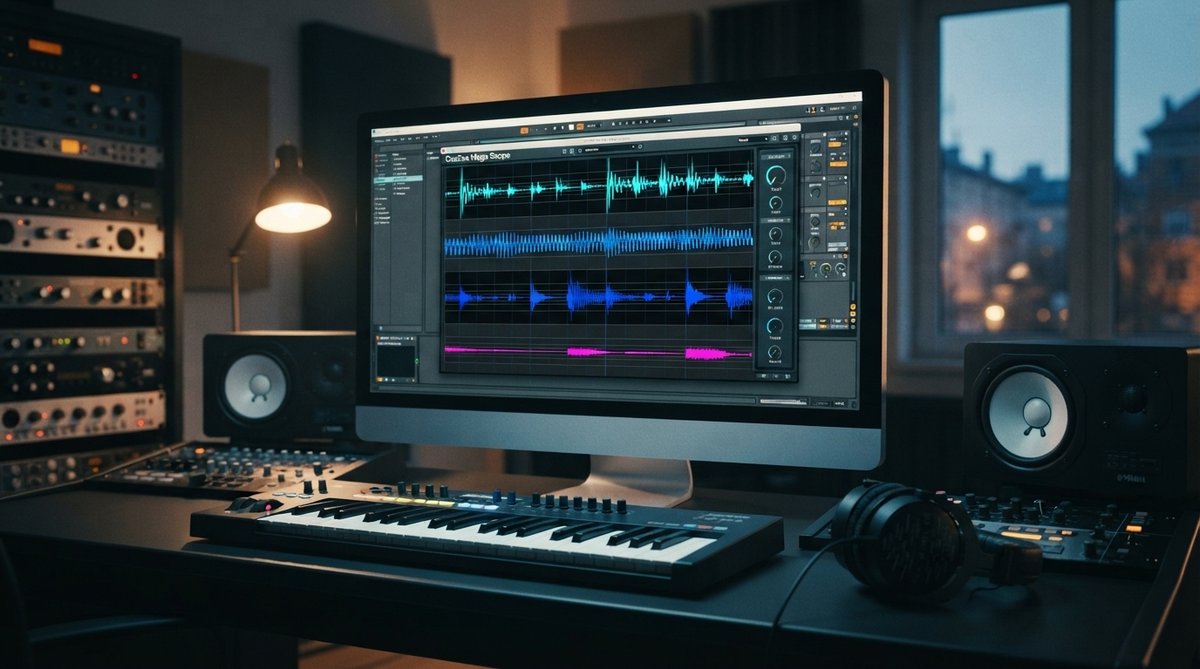
The most effective tool for seeing your drum transients is an oscilloscope. A high-quality oscilloscope plugin like Oszillos Mega Scope provides a real-time, beat-synced visual representation of your audio waveforms. You can place an instance on individual drum tracks or a drum bus to see exactly how each hit's transient behaves. Its multi-input support is particularly useful for comparing the transients of different drum elements against each other. For example, you can visually fine-tune compressor settings on a kick drum by observing how the initial peak is affected, or ensure your snare has the sharp attack it needs.
While Spectrum 2 is excellent for inspecting the frequency content of your drums and identifying clashes in the spectral domain, an oscilloscope focuses specifically on the time-domain characteristics, making it ideal for transient analysis. You can learn more about how an oscilloscope can transform your workflow in our article Oszillos Mega Scope Multi Channel Audio Oscilloscope Plug In.
Shaping Transients for Impact and Groove
Once you can clearly see your drum transients, you gain powerful control over your drum programming and mixing:
Tightening Kicks and Snares: Use an oscilloscope to ensure the initial attack of your kick and snare is sharp and clear. If a kick transient looks too rounded or a snare lacks its initial crack, you might adjust your sample choice, apply a transient shaper, or fine-tune your compressor's attack settings. Visualizing this makes decision-making much faster.
Layering Drums: When layering drum samples, especially kicks or snares, it's crucial to align their transients precisely. An oscilloscope allows you to zoom in and ensure the initial peaks of your layered sounds hit at the exact same moment, creating a single, powerful transient rather than a slight flam or smeared sound.
Creating Dynamic Grooves: Not every drum hit needs the same amount of punch. By visually analyzing and adjusting the transients of individual hits within a groove, you can create subtle variations in impact. A slightly softer transient on a ghost note, for instance, helps emphasize the main beat, contributing to a more human and dynamic feel.
Precise transient alignment is crucial for layered drums, ensuring a single, powerful hit rather than a muddy or flammed sound.
For overall dynamic enhancement and maximizing the impact of your drums, plugins like OOMPH can be incredibly useful. By splitting the audio into frequency bands, OOMPH allows you to independently enhance the punch and clarity of specific frequency zones, directly influencing how transients are perceived across the spectrum. This can add a professional polish and cohesion to your entire drum mix. For broader insights into balancing your mix, check out The Art Of Spectral Balance How To Achieve A Professional Sounding Mix.