What is Mix Bus Processing?
Unlike processing individual tracks, which focuses on shaping each sound in isolation, mix bus processing works on the entire stereo mix. The goal is not to fix problems, but to enhance the overall impression, add glue, and sculpt the macro-tone of your production. Think of it as the final layer of polish that makes everything sit together beautifully.
Mix bus processing is about enhancing the whole, not fixing individual parts.
The Power of Bus Compression
Bus compression is often the cornerstone of mix bus processing. A carefully applied compressor on your master bus can subtly reduce dynamic peaks, bringing up quieter elements and making the entire mix feel more consistent and denser. It creates a sense of "glue" where instruments seem to lock into place with each other. For this, subtle settings are key: a slow attack allows transients to pass, preserving punch, while a relatively fast release helps the compressor recover quickly without pumping.
Different compressor types impart unique characteristics. A VCA-style compressor might offer a clean, punchy glue, while an optical or vari-mu style could add warmth and a smoother feel. Experiment with different emulations to find the character that suits your mix.
Beyond Compression: EQ and Saturation on the Mix Bus
While individual track EQ handles surgical adjustments, mix bus EQ is for broad, subtle tone shaping. You might apply a gentle high-shelf boost for air, a low-cut filter to clean up infrasonic rumble, or a slight cut in the low-mids to remove muddiness. Even half a decibel of adjustment can make a noticeable difference across the entire mix. Tools like Spectrum 2 are invaluable here, allowing you to clearly visualize your mix's frequency content and identify areas for subtle adjustments. This helps you achieve a balanced sound, a topic further explored in The Art Of Spectral Balance How To Achieve A Professional Sounding Mix.
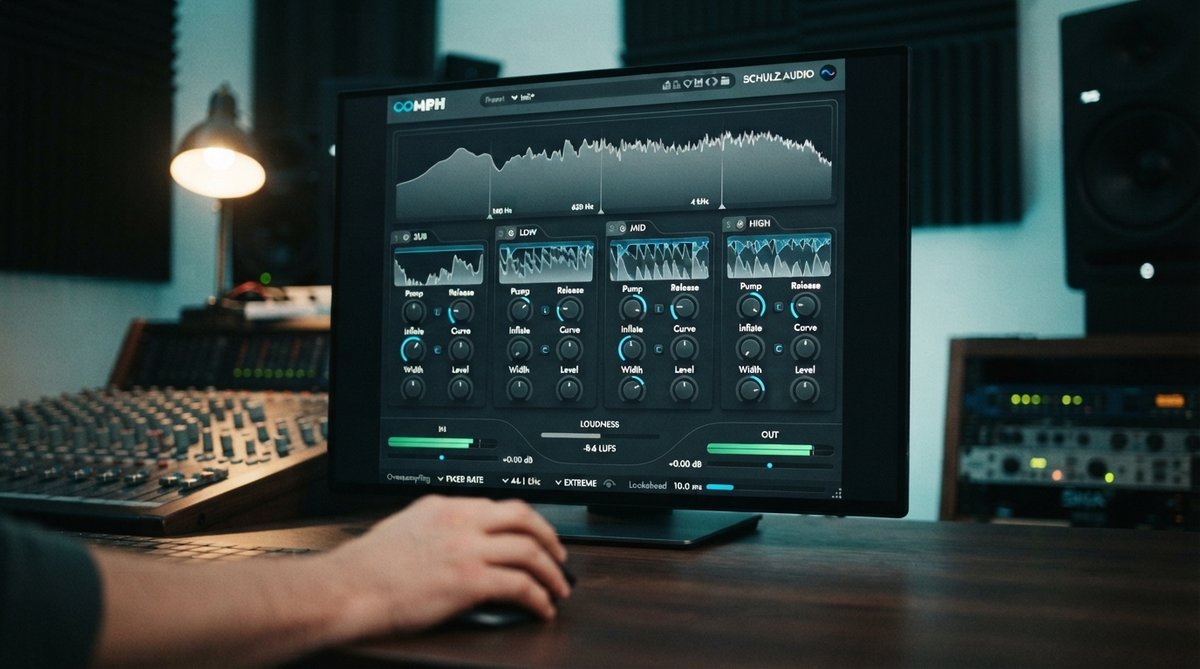
Saturation on the mix bus adds harmonic richness, density, and perceived loudness without significantly increasing peak levels. It can warm up a sterile mix or add a subtle aggression. A multiband dynamic enhancement plugin like OOMPH is particularly effective for this, allowing you to apply saturation, dynamics, and stereo width adjustments independently across four frequency bands. This enables precise macro-tone shaping, ensuring punch and clarity exactly where you need it.
Subtle adjustments on the mix bus have a profound impact on the entire sound.
Visualizing Your Mix Bus Processing
Relying solely on your ears is crucial, but visual feedback offers a powerful complement. An oscilloscope like Oszillos Mega Scope can show you how your bus compressor is affecting waveforms, revealing subtle changes in transients and overall dynamics. Similarly, Spectrum 2 provides a detailed view of your frequency spectrum, helping you confirm your EQ decisions and spot any lingering frequency imbalances. Learning to effectively use these tools can deepen your understanding of your mix; read more about it in [LINK:unlock-the-power-of-audio-analysis-with-oszillos-mega-scope] and Spectrum 2 The Ultimate Multi Channel Spectrum Analyser Plug In.
By observing how processing affects the visual representation of your sound, you gain a clearer picture of what your ears are perceiving, leading to more informed and confident mixing decisions.
Tips for Effective Bus Processing
When applying bus processing, remember these principles: * Process in Context: Always make adjustments while listening to the entire mix, not in solo. * Less is More: Small changes on the mix bus often have a big impact. Aim for subtle enhancements rather than drastic alterations. * Listen at Different Levels: Your perception of balance and tone changes with volume. Check your mix bus processing at various listening levels. * Use Reference Tracks: Compare your processed mix to professionally mixed and mastered tracks to gauge your macro-tone and cohesion. * A/B Test Frequently: Bypass your processing regularly to ensure your changes are truly improving the mix.