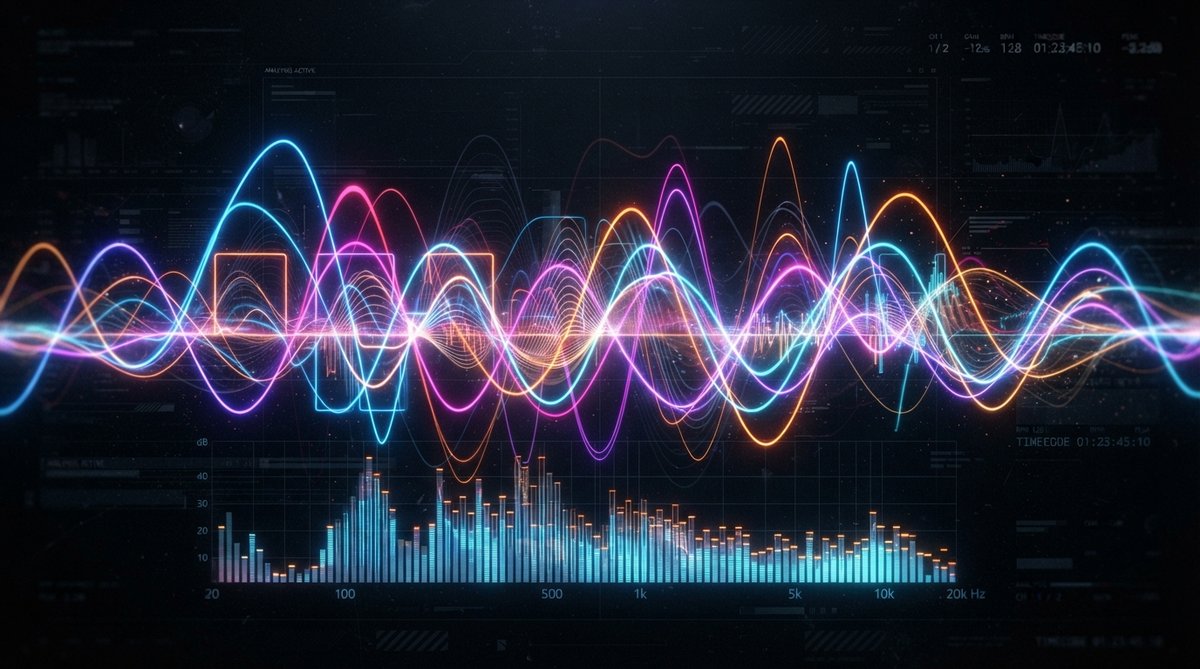
Understanding the Foundation: What is Sampling?
At its core, sampling involves taking a portion of an existing sound recording, known as a 'sample', and reusing it in a new piece of music. This could be anything from a single drum hit, a vocal phrase, a melodic riff, or an entire instrumental loop. In electronic music, samples are often the building blocks for beats, melodies, and textures.
The Power of Loop Manipulation
While using loops as they are can be effective, true artistry emerges when you start to manipulate them. Instead of simply dragging and dropping, consider how you can reshape a loop to fit your vision or create something entirely new. This process is key to developing a unique sound.
Transforming a static loop into a dynamic element is where the real magic of electronic music production happens.
Beat Slicing and Chopping
Beat slicing, or chopping, is a classic technique where you cut a drum break or rhythmic loop into individual hits. Once sliced, these individual hits can be rearranged, re-sequenced, and processed independently. This allows you to create entirely new grooves from existing material. When slicing, paying close attention to the transients of each hit is vital for clean cuts. Using a visual tool like Oszillos Mega Scope can help you make surgical edits by displaying the waveform in real time. For more on rhythmic precision, check out Mastering Drum Transients Visualizing Your Drum Programming For Impact And Groove.
Time Stretching and Pitch Shifting
These techniques allow you to alter a loop's tempo without changing its pitch, or change its pitch without affecting its tempo. Modern DAWs offer sophisticated algorithms for both. Time stretching can help fit a loop into your track's BPM, while pitch shifting can transpose it to match your song's key. Experimenting with extreme time stretching can lead to interesting granular textures and atmospheric pads, pushing the boundaries of traditional sound design.
Reversing and Layering
Reversing a sample can instantly create unique sonic effects, often adding a sense of anticipation or an otherworldly feel. Try reversing elements like cymbals, pads, or vocal snippets for surprising results. Layering involves combining multiple samples or loops to create a richer, more complex sound. For instance, you might layer a clean drum loop with a heavily processed, reversed version for added depth. When layering, it is important to check for frequency clashes. Spectrum 2 can help you visualize the frequency content of your layered sounds, ensuring they sit well together in the mix. You can learn more about this in Identifying And Fixing Frequency Clashes For A Crystal Clear Mix.
Don't just listen to your samples; manipulate them to uncover hidden sonic potential.
Creative Effects Processing
Applying effects to manipulated loops opens up a vast world of sound design. Consider these approaches: * Dynamics and Punch: Use a multiband dynamic enhancer like OOMPH on individual slices or a whole loop to bring out specific frequencies and add punch or clarity. This can be especially effective on drum breaks or bass loops. * Spatial Effects: Add depth and width using reverb and delay. For classic 80s digital character, try JP-ME-1 on a melodic loop or vocal snippet. If you prefer to experiment with custom spaces, RedVerb 2 allows you to load impulse responses and tweak their size and decay. Understanding reverb pre-delay is also crucial for clarity; see The Essential Guide To Reverb Pre Delay Adding Depth And Clarity To Your Mix. * Modulation: A chorus effect, like JUNI 1984 CHORUS, can add shimmering width and movement to pads or synth loops, giving them an analog warmth. Explore more about chorus effects in What Is A Chorus Effect How To Add Width And Movement To Your Mix. * Filtering and EQ: Aggressive filtering or creative EQ can drastically alter a sample's character. Sweep filters for builds or create unique textures. For advanced techniques, refer to Creative Filtering Techniques Sculpting Tones Beyond Basic Eq.
Beyond the Loop: Arranging and Developing Ideas
Once you have manipulated your samples and loops, think about how they fit into the larger arrangement of your track. Don't let a single loop dictate the entire song. Instead, use your manipulated sounds as starting points for developing variations, breaks, and transitions. This approach moves beyond simple repetition and helps create a more engaging and evolving musical piece. For more on structuring your tracks, consider The Art Of Arranging For Electronic Music Beyond The Loop.