Beyond the Eight-Bar Loop
While a strong eight-bar loop is the foundation of many electronic tracks, relying solely on it can lead to monotony. Great electronic music, much like other genres, tells a story. It builds tension, offers release, and guides the listener through different emotional landscapes. Thinking about your track's arrangement from early on helps transform a good idea into a compelling piece of music.
Understanding Song Structure for Electronic Tracks
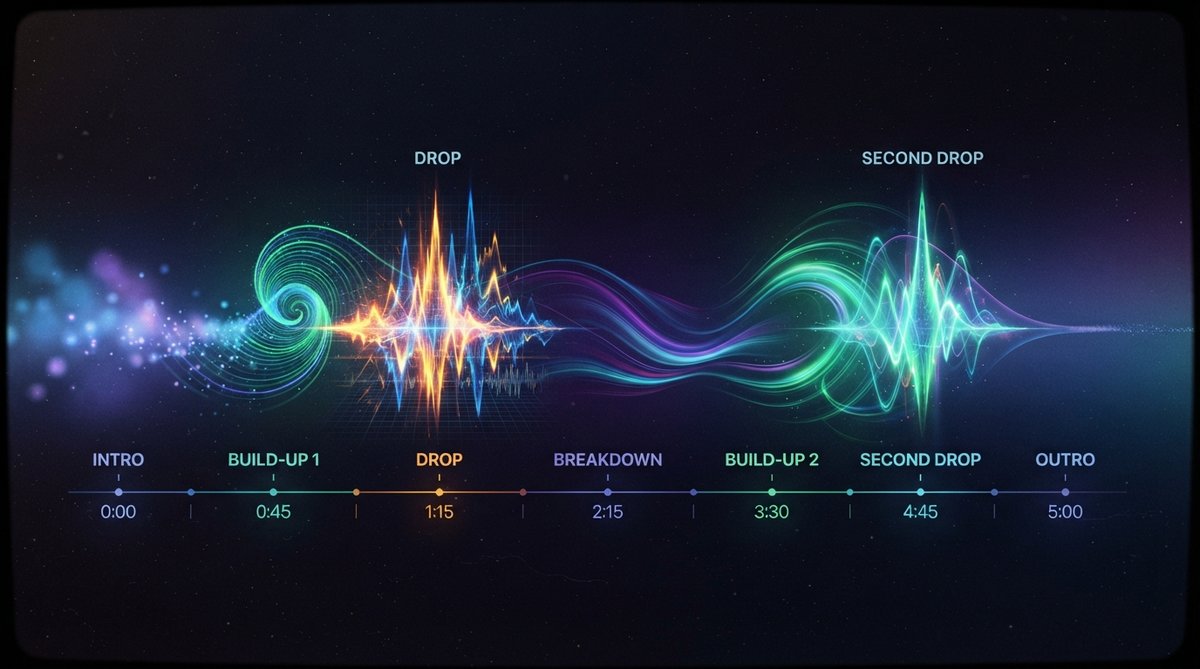
Even without traditional vocals, electronic music benefits from clear structural elements. Common sections include:
- Intro: Sets the mood, often with minimal elements or ambient textures.
- Verse/A-Section: Develops the primary melodic or rhythmic ideas.
- Chorus/B-Section: The main hook or most energetic part of the track.
- Breakdown: Strips back elements, creating space and anticipation.
- Build-up: Gradually increases energy towards a drop or chorus.
- Outro: Gently fades out or deconstructs the track's themes.
These are flexible guidelines, not strict rules. The key is to create distinct sections that feel purposeful and contribute to the track's overall narrative.
Effective arrangement transforms repetitive loops into a dynamic and engaging musical story.
Crafting Engaging Transitions
Smooth, impactful transitions are crucial for moving listeners between sections without jarring them. They maintain energy and build excitement. Here are some techniques:
- Risers and Sweeps: Gradually increasing in pitch or frequency, often with white noise or synth sounds. You can use a reverb like RedVerb 2 to create lush, evolving tails on these elements or a classic 80s digital reverb like JP-ME-1 for a nostalgic wash that signals a change. The 'Size' and 'Decay' parameters in RedVerb 2 are excellent for shaping these sonic movements.
- Fills and Drum Rolls: Short rhythmic breaks that signal a new section.
- Filtering and EQ Automation: Gradually opening or closing filters, or sweeping EQ bands, can create a sense of movement and reveal new sonic elements.
- Reverb and Delay Washes: Letting reverb tails or delay repeats bleed into the next section can smooth the transition.
Visualizing these changes can be very helpful. Tools like Oszillos Mega Scope allow you to see how waveforms evolve during a transition, helping you fine-tune timing and impact. Spectrum 2 provides a multi-channel view of frequency content, letting you observe how your EQ sweeps or filter changes affect the overall spectral balance in real time. For more on visual analysis, check out [LINK:unlock-the-power-of-audio-analysis-with-oszillos-mega-scope] and Spectrum 2 The Ultimate Multi Channel Spectrum Analyser Plug In.
Thoughtful transitions are the glue that holds your track together, guiding the listener through its progression.
The Art of the Build-Up and Breakdown
Build-ups and breakdowns are where electronic music truly shines in creating tension and release. A well-executed build-up can create immense anticipation for a drop or chorus.
- Build-ups: Increase density, add layers, introduce white noise, automate filter cutoffs upwards, or increase delay and reverb sends. Gradually introduce elements like snares on every beat or a sustained synth pad. Volume automation is also key. For adding extra punch and impact to your build-up elements right before the drop, consider using OOMPH to enhance specific frequency bands and maximize their presence. This can make the ensuing drop feel even more powerful. Learn more about creating drama in your tracks in The Art Of Creating Tension And Release In Music Production.
- Breakdowns: Offer a moment of respite. Strip away drums, filter out high frequencies, introduce atmospheric pads, or bring in a new, softer melodic element. This creates a contrast that makes the return of the full energy even more impactful.
Developing Your Arranging Ear and Eye
The best way to improve your arranging skills is to actively listen to music you admire. Pay attention to how tracks build, transition, and release energy. Try to map out the structure of your favorite songs. Use visual tools like Oszillos Mega Scope to observe how waveform dynamics change across different sections or Spectrum 2 to see how frequency content shifts from a breakdown to a build-up, and into a full chorus. This visual feedback can reinforce what you hear and help you make more informed decisions in your own productions. Developing these critical listening skills is invaluable; find out more in Developing Your Critical Listening Skills Ear Training For Mix Engineers.
Arrangement is an iterative process. Don't be afraid to experiment, move sections around, or even delete parts that aren't serving the song. The goal is to create a dynamic and engaging experience for your listener, moving them beyond the simple repetition of a loop.