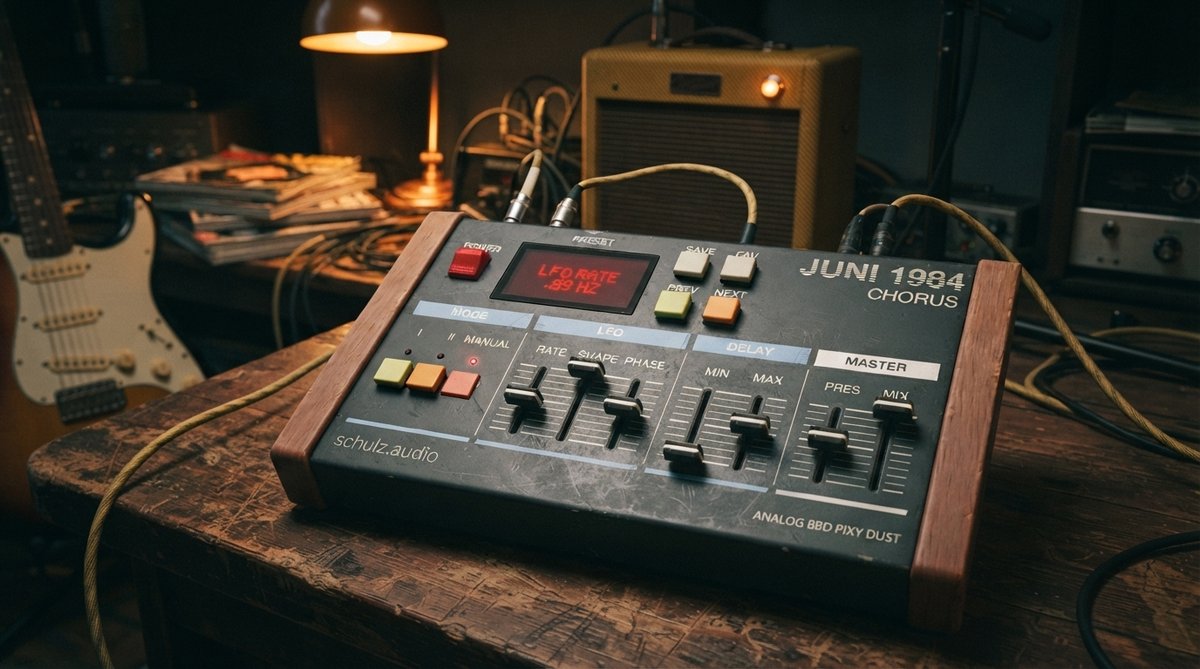
Understanding the Chorus Effect
At its heart, a chorus effect works by creating several slightly detuned and time-modulated copies of an audio signal. These copies are then mixed back in with the original dry signal. The subtle differences in pitch and timing between these copies create a sense of multiple voices playing simultaneously, much like a choir where each singer has a slightly unique vocal characteristic.
A chorus effect thickens and widens your sound by layering slightly detuned and time-shifted copies of the original signal.
How Chorus Creates Width and Movement
The magic of chorus lies in its use of short, modulated delay lines. A low-frequency oscillator (LFO) continuously varies the delay time of the copies. When these modulated copies are panned across the stereo field and mixed with the original, our ears perceive the sound as wider and more expansive. The constantly shifting pitch and timing introduce a pleasant 'swirl' or 'shimmer' that adds movement and life to an otherwise static sound. Analog chorus units, often built around Bucket Brigade Delay (BBD) chips, are particularly prized for their warm, organic character, which our JUNI 1984 CHORUS plugin faithfully emulates.
Key Parameters of a Chorus Effect
Understanding these core parameters will help you dial in the perfect chorus sound:
- Rate (Speed): This controls how fast the LFO modulates the delay time. A slow rate creates gentle, undulating movement, while a fast rate can produce a more noticeable vibrato or 'wobble' effect.
- Depth (Intensity): Depth determines the amount of pitch and time variation applied by the LFO. Higher depth settings result in a more pronounced, intense chorus sound, while lower settings offer a subtle thickening.
- Delay Time (Delay Offset): This sets the base delay time for the copies before modulation. Shorter delay times typically result in a more classic chorus sound, while longer times can venture into flanger territory.
- Feedback: Adding feedback sends a portion of the chorused signal back into the effect's input, creating a richer, more resonant, and sometimes metallic sound.
- Mix (Wet/Dry): The mix knob blends the processed (wet) signal with the original (dry) signal. For subtle thickening, you might use a lower wet mix, while for dramatic effects, you might lean towards a higher wet mix or even full wet.
Practical Applications in Your Mix
Chorus is incredibly versatile. It is commonly used on:
- Synthesizers: To make pads sound lush, leads more prominent, and basslines fatter.
- Guitars: For classic clean electric guitar tones, ambient textures, or to make acoustic guitars sparkle.
- Vocals: To add subtle thickness and presence, making them sit better in a busy mix.
- Pads and Strings: To create a wide, ethereal soundscape.
For more creative ideas beyond typical synth applications, check out our article on Beyond Synths Creative Ways To Use Chorus On Vocals Guitars Reverbs. Experimenting with chorus on different sources is key to discovering its full potential for adding width and movement to your tracks. You can also explore other methods for expanding your soundstage in our guide to Mastering Stereo Width Techniques For A Wider Mix With Modulation Effects.
Use chorus to add shimmer to synths, thicken vocals, or create expansive stereo width, but always listen carefully to avoid muddiness.
Whether you are aiming for a subtle thickening or a dramatic, swirling sound, the chorus effect is a powerful tool in any producer's arsenal. By understanding its core principles and parameters, you can effectively use it to inject life, width, and movement into your mixes.