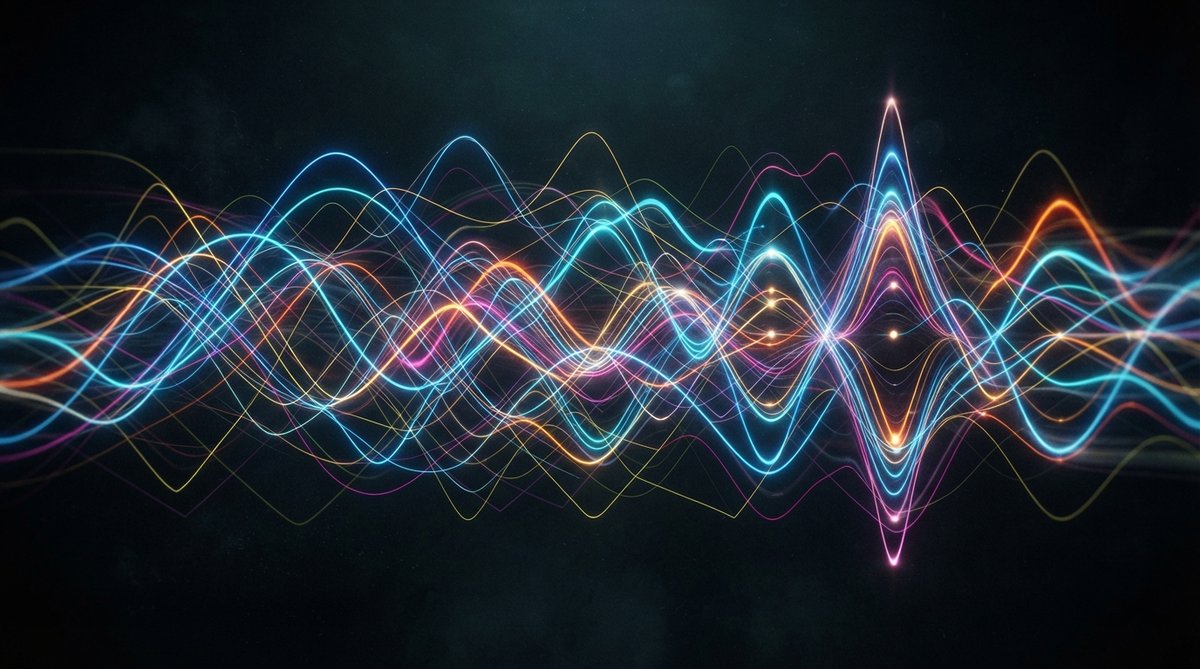
Understanding Polyrhythms
A polyrhythm occurs when two or more independent rhythmic patterns with different subdivisions are played simultaneously within the same overarching meter. The most common example is 3 against 2, where a triplet rhythm plays over a duple rhythm. Imagine a drummer playing eighth-note triplets on the hi-hat while keeping a steady eighth-note pattern on the snare and kick. The accents of these two rhythms will clash and resolve in interesting ways, creating a sense of rhythmic push and pull.
Polyrhythms create rhythmic tension and release by layering different subdivisions within a single time signature.
Implementing polyrhythms in your drum programming or melodic lines can add significant sophistication. Start by setting up a basic groove, perhaps in 4/4. Then, introduce a second rhythmic element that subdivides the beat differently. For instance, if your main groove is based on quarter notes, try playing a line of five notes evenly spaced over those four beats. This creates a 5-against-4 polyrhythm. The trick is to ensure both patterns are clearly audible while still feeling cohesive.
Exploring Polymeters
Polymeter, while often confused with polyrhythm, is a distinct concept. In a polymeter, two or more instruments or sections of a piece operate in different time signatures simultaneously, but their starting points (downbeats) often align at regular intervals. For example, a track might have a drum part in 4/4, a bassline in 3/4, and a synth arpeggio in 5/4. Each part maintains its own meter, cycling independently, but they might all hit their respective '1' on the same beat every 12 or 20 beats, depending on the chosen meters.
Polymeters involve different time signatures playing concurrently, often with synchronized downbeats at larger intervals.
This technique can create a feeling of constant evolution and unpredictability while still retaining an underlying structure. It's common in progressive rock, jazz, and various forms of electronic music. When programming polymeters, careful attention to how the different rhythmic cycles interact is crucial to avoid a chaotic sound. Often, one meter will feel like the dominant pulse, grounding the other, more fluid elements.
Visualizing Complex Rhythms for Precision
When working with intricate polyrhythms and polymeters, your ears are your primary guide, but visual feedback can be incredibly helpful for fine-tuning. An oscilloscope allows you to see the exact timing and phase relationships between different rhythmic elements. Oszillos Mega Scope is a powerful tool for this, letting you monitor multiple inputs and visualize how your waveforms align and overlap in real time. This can be invaluable for pinpointing subtle timing issues or ensuring that the desired rhythmic interplay is truly happening. You can also use it to check for phase cancellation that might weaken the impact of your complex drum patterns. For more on optimizing drum impact, check out Mastering Drum Transients Visualizing Your Drum Programming For Impact And Groove.
Another visual aid is a spectrum analyzer. While not directly for rhythm, seeing the frequency content of your individual rhythmic layers with a tool like Spectrum 2 can help ensure that each element has its own space, even within complex arrangements. This prevents frequency clashes that could muddy your intricate grooves. Learn more about identifying and fixing these issues in Identifying And Fixing Frequency Clashes For A Crystal Clear Mix.
Enhancing Your Complex Grooves
Once your polyrhythmic or polymetric foundations are in place, you can further enhance their impact. Consider using dynamic processing to give individual drum hits or rhythmic motifs more punch and clarity. OOMPH is a multi-band dynamic enhancement plugin that can help you maximize the impact of your sounds. By splitting the audio into flexible frequency bands, you can independently control saturation, dynamics, and stereo width, ensuring that even the most complex rhythmic elements cut through with definition. This is especially useful for making sure the accents of your polyrhythms are felt, not just heard.
Creative use of effects can also complement complex rhythms. Short, rhythmic delays can create additional layers of rhythmic interest, echoing the polyrhythmic feel. Explore various techniques in Creative Delay Techniques Adding Dimension And Groove To Your Productions. Experiment with layering different drum sounds and synthesis techniques to build unique textures that support your advanced rhythmic structures, as discussed in Designing Unique Drum Sounds Synthesis And Layering For Modern Rhythms.
Practical Application and Experimentation
The best way to master polyrhythms and polymeters is through experimentation. Start small: try a simple 3-against-2 polyrhythm with a shaker over a kick-snare pattern. Gradually introduce more complex ideas. Don't be afraid to break traditional rhythmic rules. The goal is to create grooves that are both engaging and musically compelling, pushing the boundaries of what a 'beat' can be.