The Foundation: Understanding Delay Types
Before diving into creative applications, it's helpful to understand the basic types of delay. Digital delays offer pristine, exact repeats, while analog delays (often based on Bucket Brigade Devices, or BBDs) introduce subtle degradation and warmth with each repeat, adding character. Tape delays emulate the sound of physical tape machines, bringing in wow, flutter, and saturation. Each type offers a different sonic flavor that can influence your sound design choices.
Slapback Delay: Instant Presence and Width
One of the most classic delay techniques is the slapback echo. This involves a very short delay time (typically 80-120ms) with little to no feedback, resulting in a single, quick repeat. It's fantastic for making vocals or guitars feel more 'present' and 'live' without cluttering the mix with long tails. It also subtly widens a mono source, giving it a sense of space without sounding explicitly delayed. Try it on a lead vocal or a dry guitar track to hear the immediate impact.
Rhythmic Delays: Building Groove and Interplay
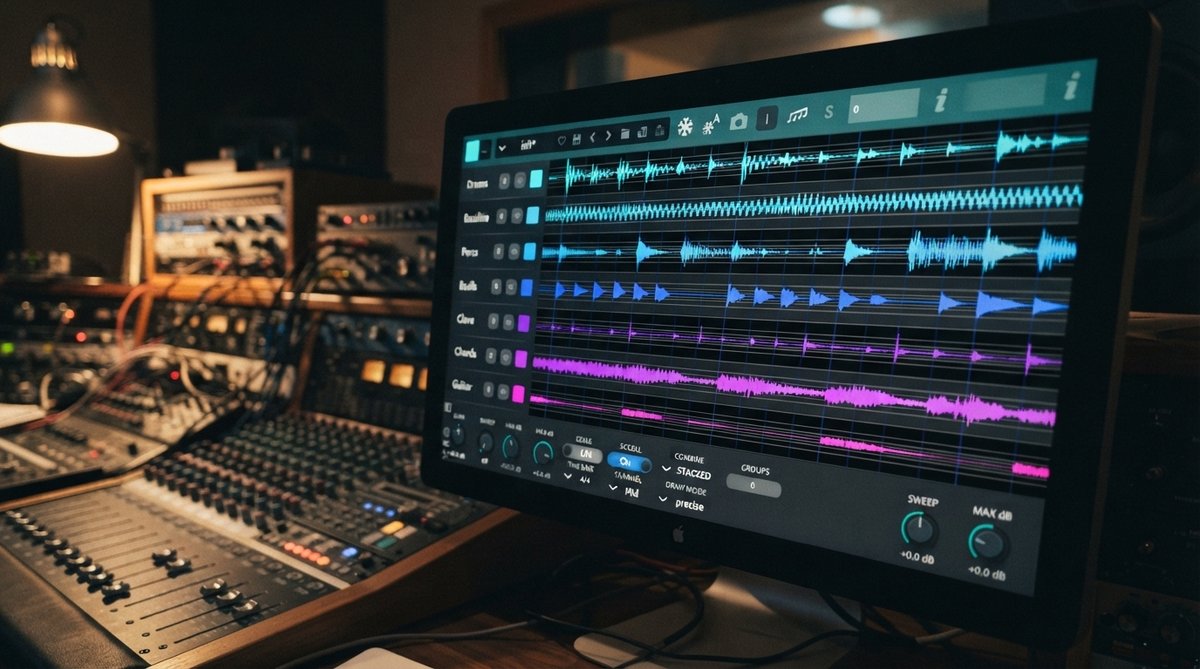
Delay can be a powerful rhythmic tool when synced to your song's tempo. Setting delay times to specific note values (e.g., eighth notes, dotted eighths, sixteenth notes) can create intricate rhythmic patterns that interact with your main melody or percussion. For example, a dotted eighth note delay on a synth arpeggio can create a driving, propulsive feel. Using a tool like Oszillos Mega Scope can be incredibly helpful here. Its BPM-synced display allows you to visually fine-tune your delay times and ensure your repeats are perfectly locked into the grid, preventing unwanted rhythmic clashes and reinforcing your track's groove. This visual feedback is also excellent for understanding how transients interact, as discussed in Mastering Drum Transients Visualizing Your Drum Programming For Impact And Groove.
Visually confirming your delay repeats are perfectly in time with your track can make a huge difference to rhythmic clarity and groove.
Stereo and Ping-Pong Delays: Expanding Your Soundstage
To add dimension and width, stereo and ping-pong delays are indispensable. A stereo delay applies separate delay times to the left and right channels, creating a wider, more expansive sound. Ping-pong delay, a common type of stereo delay, alternates repeats between the left and right channels, creating a dynamic back-and-forth movement. This technique can make a mono instrument fill out the stereo field dramatically, useful for pads, guitars, or even subtle vocal effects. Experiment with slight offsets in delay times between channels for an even more interesting, swirling effect.
Delay as an Ambient Texture Generator
With longer delay times and increased feedback, delay can evolve into a sound design element that creates lush, evolving ambient textures. By pushing the feedback knob, repeats can smear into washes of sound, almost like a reverb. You can further sculpt these evolving textures by placing EQ or modulation effects after the delay in the signal chain. For instance, adding a JUNI 1984 CHORUS after a long delay can introduce beautiful movement and shimmer to the repeats, creating a dreamy, ethereal soundscape. For reverbs that excel at creating rich, immersive spaces, consider products like RedVerb 2 or the retro charm of JP-ME-1, which can be combined with delays to build truly complex sonic environments. Remember that pre-delay is also a critical parameter for reverb, helping to separate the dry signal from the wet space, a topic explored further in The Essential Guide To Reverb Pre Delay Adding Depth And Clarity To Your Mix.
By placing EQ and modulation effects after your delay, you can transform simple echoes into complex, evolving soundscapes.
Filtering and Modulating Delay Repeats
Applying filters to your delay repeats is a crucial step for maintaining mix clarity and enhancing creative expression. High-passing the delay tail prevents low-end build-up, keeping your mix clean. Low-passing can soften harsh repeats, making them blend more seamlessly into the background. Using dynamic EQ or even simple static EQ on delay returns helps them occupy their own space without clashing with other elements, a technique that applies to all time-based effects. For more on using visual tools like a spectrum analyzer for precise EQ decisions, check out Beyond The Ears Using A Spectrum Analyzer For Precise Eq Decisions. Beyond EQ, adding subtle chorus or flanger to the delay repeats can introduce movement and character, making the echoes more interesting without making the dry signal sound overly processed. This is where the Bucket Brigade Delay emulation in JUNI 1984 CHORUS can add a unique analog sparkle to your delay tails.
Conclusion
Delay is a versatile effect that offers endless creative possibilities. Whether you're aiming for subtle presence, intricate rhythms, expansive stereo width, or lush ambient textures, understanding these techniques will help you add depth and groove to your productions. Experimentation is key; try these ideas with different instruments and settings to discover new sonic territories in your music.