What is Dynamic Response in Overdrive?
Dynamic response refers to how an overdrive unit reacts to the varying intensity of your guitar playing. A highly dynamic overdrive will clean up when you play softly and provide more grit and compression as you hit the strings harder. This nuanced interaction is what makes a great overdrive feel like an extension of your instrument, not just an effect placed on top of it. It is distinct from the broader categories of gain effects, as we discussed in Whats The Difference Between Overdrive Distortion And Fuzz.
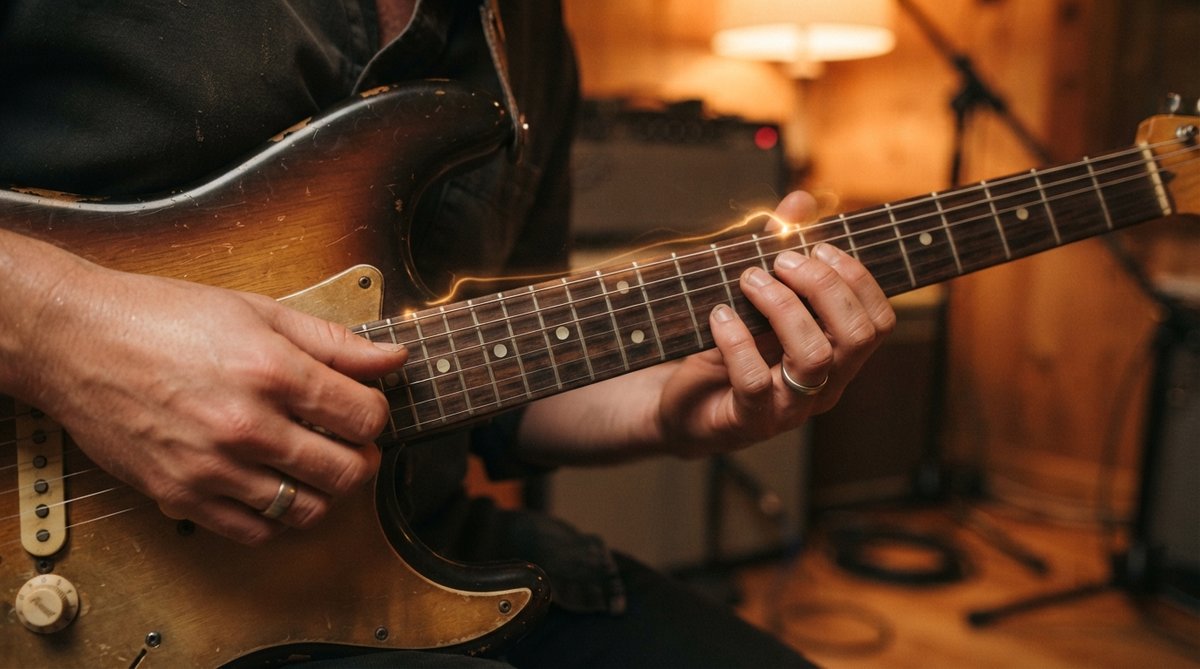
A truly responsive overdrive cleans up with a light touch and roars with a heavy strum, making your guitar feel alive.
Touch Sensitivity and Expressive Playing
Imagine playing a blues lick: a gentle strum might yield a warm, slightly furry tone, while digging in produces a biting, saturated lead sound. This ability to manipulate the overdrive level purely through your picking hand's dynamics is touch sensitivity. It allows you to convey emotion and subtle phrasing without constantly adjusting your guitar's volume knob or switching pedals. It is a cornerstone of expressive guitar playing, empowering you to shape your tone in real time.
The Challenge for Overdrive Plugins
Historically, replicating the complex, non-linear behavior of analog circuits in a digital plugin was a significant challenge. Early plugins often felt static or 'on/off' compared to their physical counterparts. The subtle interactions between components that give analog pedals their unique dynamic character were hard to model accurately. This is where advanced technologies like True Circuit Simulation come into play, aiming to capture every nuance of the original hardware. For a deeper look at how gain stages contribute to this, check out Unlocking The Magic Of Preamp Gain From Clean Warmth To Gritty Overdrive.
Achieving Authentic Feel with Schulz.Audio
At schulz.audio, we understand that feel is paramount. Our Schulz Tonebreaker overdrive plugin, for example, is built with True Circuit Simulation technology to faithfully recreate the dynamic response of a classic British blues overdrive. This means it reacts to your playing intensity much like the physical pedal it emulates, allowing for incredible touch sensitivity and expressive control. Users often comment on how well it reacts to both soft and hard playing, making it feel organic and responsive. If you're aiming for that classic British blues tone, this dynamic accuracy is vital, as explored in Crafting The Classic British Blues Guitar Tone In Your Daw.
Similarly, our Schulz PortaCrunch 424 plugin, which captures the unique gain stages of a legendary cassette four-track recorder, offers a distinct, dynamically rich character. From warm, colorful cleans to gritty saturation, it responds with sensitivity, bringing that iconic 90s lo-fi feel to your tracks. Its True Circuit Simulation ensures that every detail of its dynamic interaction is preserved, just like the original hardware. You can learn more about recreating that specific sound in How To Get That Authentic Cassette Tape Sound In Your Daw.
Modern plugins employing True Circuit Simulation can deliver the nuanced dynamic response previously only found in physical overdrive pedals.
Visualizing Dynamic Response
While your ears are the ultimate judge, visual tools can sometimes offer insights into how an overdrive is shaping your signal's dynamics. An oscilloscope, like our Oszillos Mega Scope, can display the waveform of your guitar signal in real-time. By observing how the peaks and troughs of the waveform change as you vary your picking attack, you can get a visual representation of the overdrive's dynamic compression and saturation characteristics. This can be a helpful learning tool to understand the nuances of different overdrive settings and how they impact your signal, as detailed further in Oszillos Mega Scope Multi Channel Audio Oscilloscope Plug In.
Conclusion
Dynamic response and touch sensitivity are not just technical specifications; they are at the core of a guitarist's connection to their instrument and tone. Whether you prefer physical pedals or the convenience of plugins, choosing an overdrive that respects and enhances your playing dynamics will elevate your expressive potential and make your guitar feel truly alive.