The Heart of the British Blues Sound
At its core, the classic British blues tone is about a guitar pushing a tube amplifier into glorious, dynamic overdrive. Think of the mid-forward roar of a Marshall or the chime of a Vox, responding directly to every nuance of a player's attack. It is not just about distortion, but about how the amplifier compresses and sustains notes, creating a rich harmonic complexity.
Dialing in Authentic Overdrive
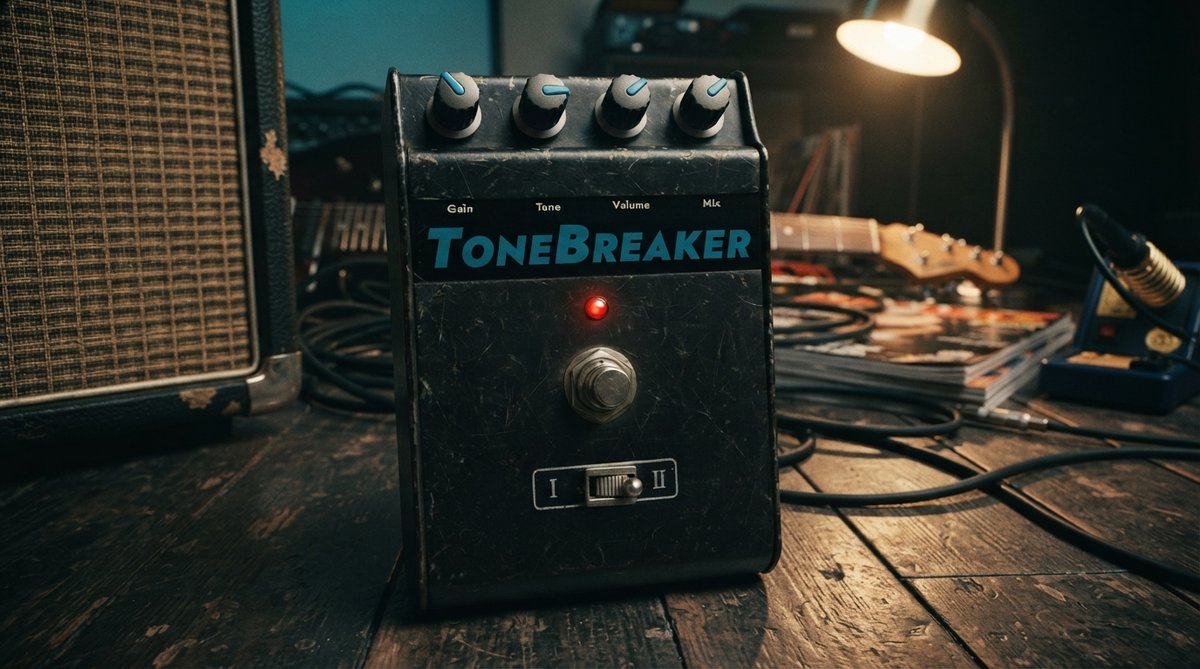
The most critical element is the overdrive. You need a pedal or plugin that can replicate the feel and sound of those pushed British amps. Our Schulz Tonebreaker plugin is purpose-built for this, offering a faithful recreation of classic British blues overdrive. Its True Circuit Simulation technology captures the dynamic response, meaning the tone cleans up when you play softly and gets aggressive when you dig in, just like a real tube amp. This dynamic interaction is what makes the sound so expressive and alive.
The secret to a great British blues tone lies in dynamic overdrive that responds to your playing touch.
Shaping the Speaker and Room Character
Beyond the amplifier itself, the speaker cabinet and the room it is in play a huge role in the final sound. The Schulz Tonebreaker includes integrated speaker cabinet and amp room modeling. This allows you to sculpt the low-end thump of a 4x12 or the tighter sound of a 2x12, and place it within a virtual room, giving your tone a sense of space and realism without needing physical gear. For more on how these simulations work, check out our article on Demystifying Amp Simulators How To Get Studio Quality Guitar Tones Without An Amp.
Adding Subtle Space with Reverb
Classic blues guitar tones typically use reverb sparingly, often just enough to give the sound a sense of realism without washing it out. A subtle spring or plate reverb can add depth. Our RedVerb 2 plugin is an excellent choice for this, as you can load impulse responses of classic spring tanks or plate reverbs, and then fine-tune parameters like decay and pre-delay to blend it perfectly into your mix. Avoid overly long or ambient reverbs; the goal is to enhance the guitar's presence, not obscure it.
Refining with EQ and Dynamics
Once your core tone is established, subtle EQ adjustments can help it sit better in a mix. A slight cut in the harsh upper-mids or a gentle boost to presence can make a big difference. For enhancing punch and clarity without over-compressing, consider using OOMPH. Its multi-band dynamic enhancement can help emphasize the attack of your guitar while controlling specific frequency zones. For deeper insights into frequency balancing, our article The Art Of Spectral Balance How To Achieve A Professional Sounding Mix offers valuable techniques.
Visualizing Your Tone for Precision
While your ears are the ultimate judge, visual feedback can be incredibly helpful for fine-tuning. Using a tool like Oszillos Mega Scope allows you to see the waveform of your guitar signal, helping you understand how dynamics are affecting the sound. Spectrum 2 provides a detailed frequency analysis, useful for identifying any unwanted resonances or muddiness in your tone. These analysis tools can guide your EQ and overdrive settings. Learn more about their applications in Oszillos Mega Scope Multi Channel Audio Oscilloscope Plug In and Spectrum 2 The Ultimate Multi Channel Spectrum Analyser Plug In.
Visual analysis tools can help you identify and correct frequency issues, ensuring a clear and powerful guitar tone.
Crafting the classic British blues guitar tone in your DAW is an achievable goal with the right tools and understanding. Focus on the dynamic overdrive, realistic amp and cabinet modeling, and subtle spatial effects to bring that iconic sound to life in your productions.