Understanding Mid-Side Processing Fundamentals
Mid-side (M/S) processing involves splitting a stereo signal into two components: the 'Mid' channel and the 'Side' channel. The Mid channel contains the summed mono information (L+R), representing everything that is central in your mix. The Side channel contains the stereo difference information (L-R), capturing all the elements that spread out to the left and right. This separation allows you to manipulate the mono and stereo aspects of your audio independently, offering fine-tuned control over your soundstage.
Why Frequency-Specific M/S Matters
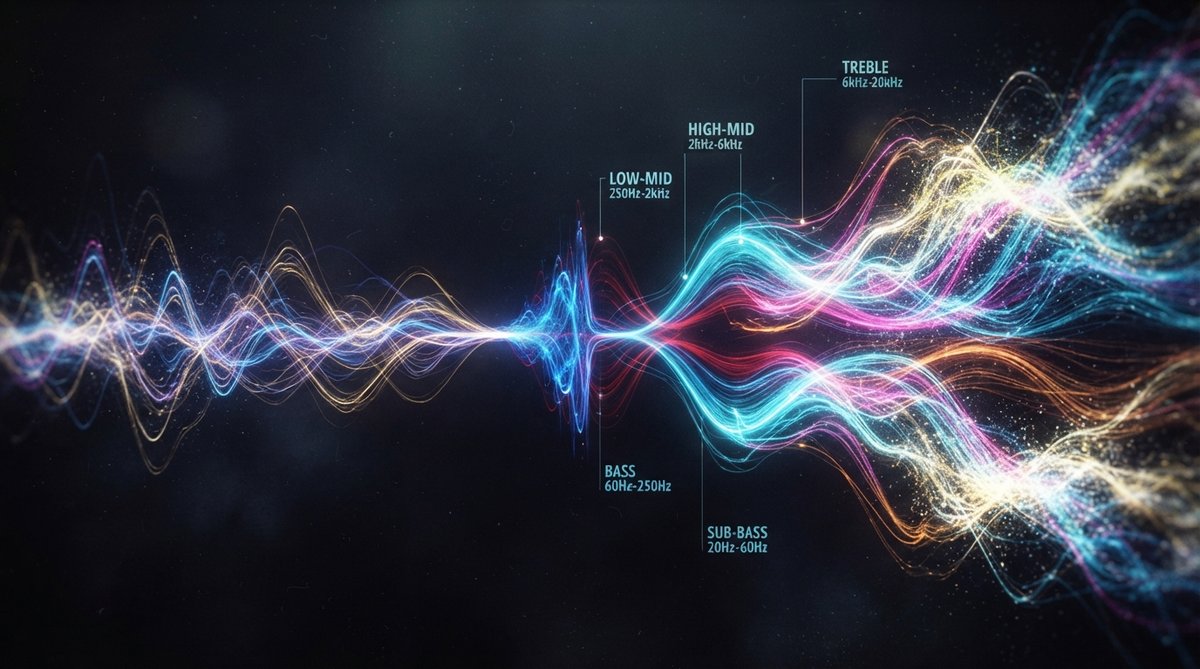
While global M/S processing can be useful for overall widening or narrowing, applying it across the entire frequency spectrum can introduce issues. For instance, excessively wide low-end frequencies can cause phase problems, muddy your mix, and even lead to playback issues on mono systems. Conversely, a mix that is too narrow in the high end might sound dull and claustrophobic. Frequency-specific M/S processing addresses these challenges by allowing you to control the stereo width of only certain frequency ranges.
Isolating frequency bands for mid-side processing allows for precise control over your mix's spaciousness without introducing unwanted artifacts.
Practical Applications for a Deeper Soundstage
Using frequency-specific mid-side techniques enables you to sculpt your soundstage with surgical precision:
Tightening the Low End: Keep your bass, kick drum, and other low-frequency elements mono or very narrow. This provides a solid foundation for your mix, preventing phase cancellation and ensuring punchy playback on all systems. You can achieve this by narrowing the Side channel for frequencies below, say, 120-200 Hz. This aligns with principles of The Art Of Spectral Balance How To Achieve A Professional Sounding Mix.
Enhancing Midrange Clarity: For elements like vocals, snare drums, or lead instruments, you might want them to sit firmly in the center while still benefiting from some surrounding ambience. You can subtly widen the Side channel in the upper midrange to give these elements more space without losing their central focus.
Broadening the High End: Elements like cymbals, reverbs, atmospheric pads, or background harmonies often benefit from significant stereo width to create a sense of air and spaciousness. Widening the high-frequency content in the Side channel can make these elements feel expansive and immersive.
Many modern mixing tools, like our OOMPH plugin, offer multiband dynamic enhancement with independent controls for stereo width across up to four flexible bands. This makes it incredibly straightforward to apply frequency-specific M/S adjustments, refining the impact, clarity, and spaciousness of individual sounds or entire busses.
Tools for Visualization and Precision
To effectively implement frequency-specific M/S processing, visual feedback is invaluable. A multi-channel spectrum analyzer like Spectrum 2 allows you to inspect the frequency content of your Mid and Side channels separately, helping you identify areas that need adjustment or where phase issues might be occurring. Similarly, an oscilloscope such as Oszillos Mega Scope can help you visualize waveform relationships and phase coherence, especially in the low end. Using these tools to inform your decisions moves you Beyond The Ears Using A Spectrum Analyzer For Precise Eq Decisions and towards more precise results.
Visualizing your Mid and Side channels with a spectrum analyzer or oscilloscope helps you make informed decisions and avoid common phase problems.
Tips for Effective Mid-Side Processing
When applying frequency-specific M/S, remember these guidelines:
- Start Subtle: Small adjustments often yield significant results. Over-widening can lead to a disconnected sound.
- Check Mono Compatibility: Always switch your mix to mono to ensure that your M/S processing hasn't introduced phase cancellation or made elements disappear. This is a critical step in Mastering Stereo Imaging Techniques For Width Depth And Focus.
- Listen in Context: Apply M/S processing within the full mix to hear its true impact.
- Use Your Ears: While visual tools are helpful, your ears should always be the final judge. Trust what sounds good in your monitoring environment. For more detailed insights into M/S EQ, explore [LINK:mastering-mid-side-eq-sculpting-stereo-width-and-depth].