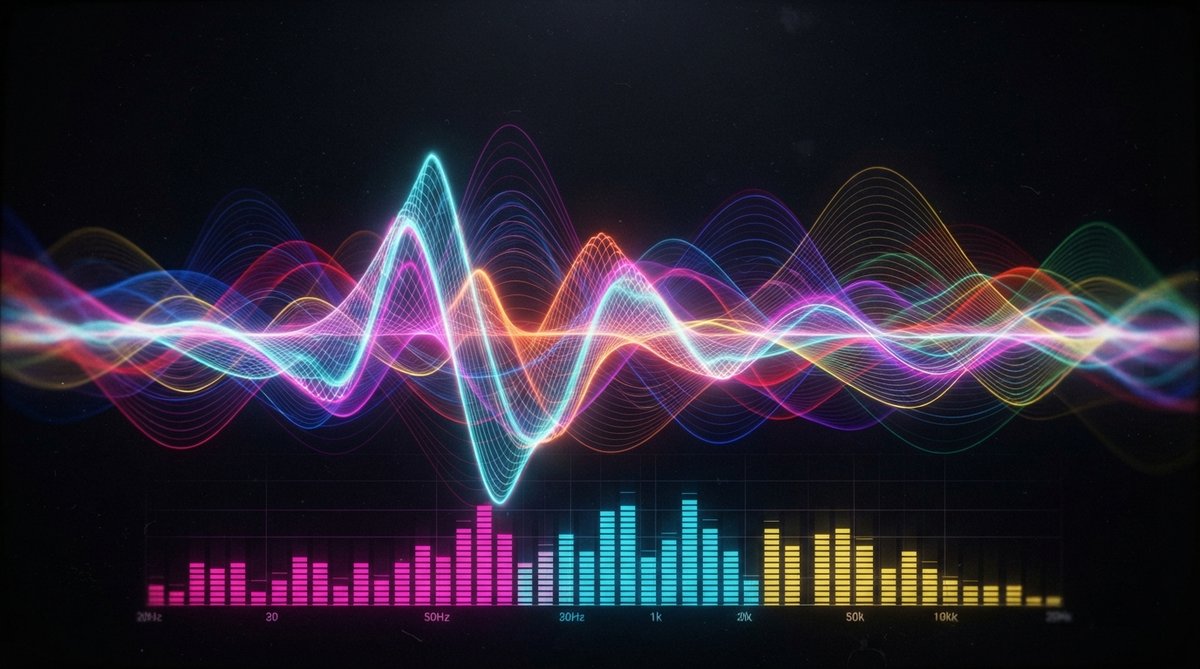
What are Harmonics and Why Do They Matter?
Every sound we hear, from a guitar strum to a synth pad, is composed of a fundamental frequency and a series of quieter, higher-pitched frequencies called harmonics or overtones. The unique combination and intensity of these harmonics define a sound's timbre, or its tonal quality. A sound rich in harmonics often feels full, bright, and vibrant, while a sound lacking them can seem dull or thin. To truly understand and control these elements, tools like Oszillos Mega Scope and Spectrum 2 are invaluable, allowing you to visually inspect the frequency content of your signals. For a deeper dive, check out our article on [LINK:understanding-harmonics-and-timbre-how-overtones-shape-your-sound].
Synthesis as a Foundation for Harmonic Complexity
Synthesis, by its very nature, is the art of building sounds from scratch, often by manipulating waveforms and their inherent harmonic content. Different synthesis methods offer unique ways to generate and sculpt harmonics:
- Additive Synthesis: Directly combines sine waves at various frequencies and amplitudes to build a desired timbre. This is the most direct way to 'layer' harmonics from the ground up.
- Subtractive Synthesis: Starts with a harmonically rich waveform (like a saw or square wave) and then uses filters to remove unwanted frequencies, shaping the harmonic spectrum.
- FM Synthesis: Creates complex timbres by modulating the frequency of one oscillator with another, generating a vast array of inharmonic and harmonic content.
Synthesis offers a direct pathway to designing sounds with specific harmonic profiles, making it a powerful tool for foundational tone building.
Saturation: Enhancing and Introducing Harmonics
Saturation is a subtle form of distortion that adds new harmonic content to a sound, making it richer, warmer, and often louder in perceived volume. It can transform a bland signal into something more exciting and present. Different types of saturation introduce different harmonic series:
- Even Harmonics: Often associated with tube-like warmth, these add richness without necessarily increasing perceived harshness.
- Odd Harmonics: Can create a more aggressive, edgy, or 'fuzzy' sound, typical of many transistor-based distortions.
Plugins like Schulz PortaCrunch 424 excel at imparting a range of saturation characteristics, from warm, colorful cleans to gritty overdrive, making it ideal for adding harmonic depth to synths, drums, or bass. For more focused control, a multiband saturation plugin like OOMPH allows you to apply saturation to specific frequency ranges. This is incredibly powerful for targeting certain harmonics without affecting others, giving you precise control over your sound's timbre. Learn more in our article The Power Of Multiband Saturation Adding Warmth Character To Specific Frequencies.
Strategic Layering: Blending Harmonic Textures
Once you understand how synthesis creates harmonics and how saturation enhances them, the next step is strategic layering. This involves combining multiple sound sources, each with its own harmonic character, to build a cohesive and rich overall tone. Consider these approaches:
- Thickening a Lead: Layer a simple sine wave or pulse wave synth with a slightly detuned, harmonically richer saw wave. Apply subtle saturation to both layers to help them gel, perhaps using Schulz Tonebreaker for a touch of grit on the saw wave.
- Adding Depth to Bass: Combine a sub-oscillator for fundamental low-end with a mid-range rich synth or a saturated bass guitar. Use OOMPH to add specific saturation to the upper harmonics of the sub, bringing out its presence on smaller speakers without muddying the low end. Visualizing this with Spectrum 2 helps ensure your low-end remains clean and powerful.
- Creating Evolving Pads: Layer multiple synth pads with different attack and decay envelopes and varying harmonic content. A chorus effect like JUNI 1984 CHORUS can add subtle movement and width, introducing its own complex harmonic interactions that thicken the sound. Reverbs such as JP-ME-1 or RedVerb 2 can then place these harmonically rich layers within a shared space, further blending them into a cohesive texture. For more on reverb sculpting, see Beyond The Basics Sculpting Reverb Size And Decay For Perfect Ambiance.
Effective harmonic layering is about more than just stacking sounds; it's about making each layer contribute uniquely to the overall timbre.
Visualizing Your Harmonic Layers
When layering sounds and applying saturation, it's easy to create frequency clashes or build up unwanted mud. This is where visual feedback becomes crucial. Oszillos Mega Scope can show you how waveforms interact in real-time, helping you identify phase issues or transient overlaps. Spectrum 2 provides a clear picture of your frequency spectrum, allowing you to see exactly where harmonics are building up or clashing across your layered sounds. Using these tools in conjunction with your ears will help you make informed decisions, ensuring your harmonically rich layers translate well across different playback systems. For more on using visual tools, check out Beyond The Ears Using A Spectrum Analyzer For Precise Eq Decisions.