What is Additive Synthesis?
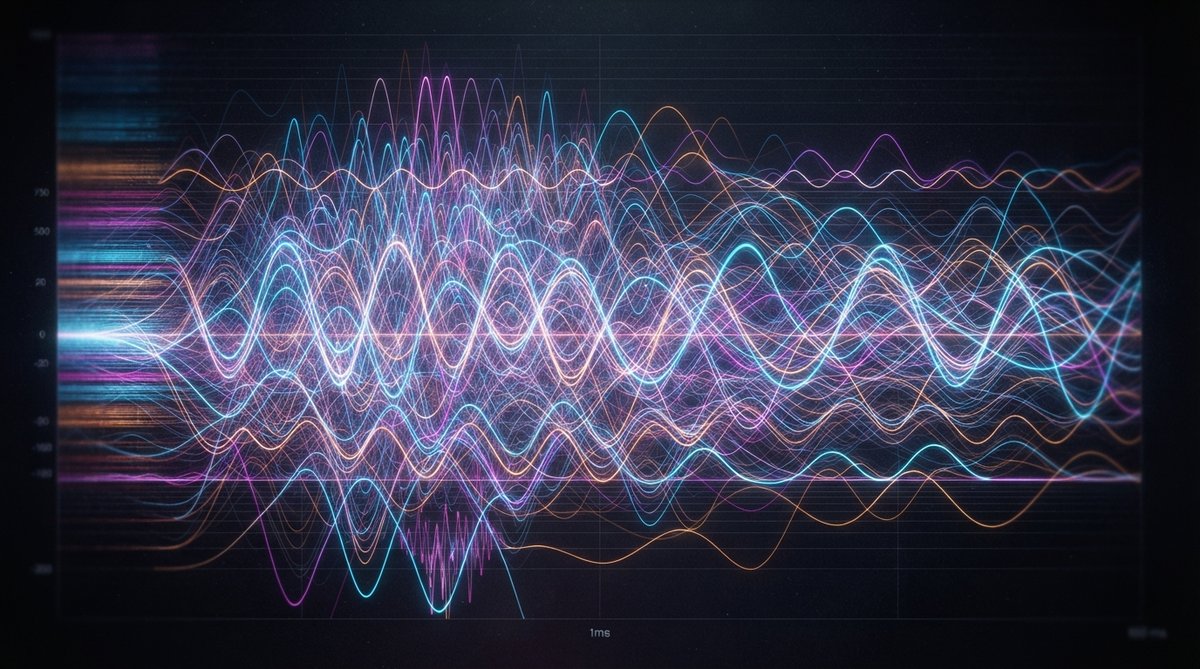
At its core, additive synthesis is the process of creating complex waveforms by combining multiple simple sine waves. These sine waves, each with its own frequency, amplitude, and phase, are layered together to form a richer, more elaborate sound. This concept is deeply rooted in Fourier analysis, which states that any complex periodic waveform can be decomposed into a series of sine waves.
Additive synthesis offers unparalleled control over a sound's timbre by letting you manipulate its individual harmonic building blocks.
The Building Blocks: Sine Waves and Harmonics
The primary components in additive synthesis are a fundamental frequency and its overtones, also known as harmonics. The fundamental is the lowest frequency in the series, determining the perceived pitch of the sound. Harmonics are integer multiples of this fundamental frequency (2x, 3x, 4x, and so on). The unique blend of these harmonics, their individual volumes, and how they evolve over time, defines a sound's timbre or tone color. This principle is key to understanding how different instruments produce their distinct sounds, even when playing the same note. For a deeper look at these concepts, consider reading [LINK:understanding-harmonics-and-timbre-how-overtones-shape-your-sound] and [LINK:the-fundamentals-of-synthesis-understanding-oscillators-and-waveforms].
Visualizing the Components
Understanding additive synthesis benefits greatly from visual feedback. Tools like a spectrum analyzer can show you the exact harmonic content of a sound. Our Spectrum 2 plugin, for instance, allows you to inspect the frequency content of your mixes, making it ideal for seeing the individual harmonics that make up a complex sound. You can place instances across different channels and monitor them from a single display, which is very helpful when analyzing how different layers contribute to the overall harmonic structure. This visual approach can greatly assist in identifying and fixing frequency clashes, as discussed in Identifying And Fixing Frequency Clashes For A Crystal Clear Mix.
Similarly, an oscilloscope provides a visual representation of the waveform itself, allowing you to see how those combined sine waves create the final shape. Oszillos Mega Scope offers a clear, BPM-synced view of your waveforms, which can be invaluable for understanding the resulting composite signal from your additive patches. Seeing the waveform evolve as you adjust harmonic amplitudes can provide immediate insight into the synthesis process. Both Spectrum 2 and Oszillos Mega Scope are available in our Oszillos & Spectrum Bundle, providing a powerful analytical toolkit for sound designers and mixers. More on these tools can be found in Spectrum 2 The Ultimate Multi Channel Spectrum Analyser Plug In and [LINK:unlock-the-power-of-audio-analysis-with-oszillos-mega-scope].
Additive Synthesis in Practice
While dedicated additive synthesizers can be complex, many digital synthesizers incorporate additive principles to some degree. Common applications of additive synthesis include recreating classic organ tones, crafting bell-like sounds, or designing evolving, atmospheric pads. By precisely controlling the amplitude of each harmonic, you can sculpt timbres that range from perfectly clean and resonant to rich and complex. Dynamic additive synthesis takes this further by allowing the amplitude and even frequency of individual harmonics to change over time, creating incredibly expressive and morphing sounds.
The power of additive synthesis lies in its ability to create entirely new timbres not found in nature, offering endless creative possibilities.
Crafting Unique Tones
The true artistry in additive synthesis comes from manipulating not just the presence of harmonics, but their individual characteristics. You can boost specific harmonics to emphasize certain frequencies, or subtly detune them for a richer, more animated sound. Even the phase of each harmonic can influence the resulting waveform, although its effect on perceived timbre is often less pronounced than amplitude. This level of granular control makes additive synthesis a potent tool for sound designers looking to create truly unique and intricate textures for their music.