The Core Concept of Delay
At its heart, a delay effect takes an audio signal, records it, and plays it back after a short, adjustable period. The magic often happens when this delayed signal is fed back into the input, creating repeats that gradually fade. While the basic principle remains the same, how that 'recording' and 'playback' happens defines the character of the delay. Understanding these differences opens up a world of creative possibilities for adding dimension and groove to your productions. For more ideas on using delay, check out our article on Creative Delay Techniques Adding Dimension And Groove To Your Productions.
Analog Delay Architectures
Analog delays are prized for their warmth, grit, and natural degradation of repeats. They typically fall into two main categories:
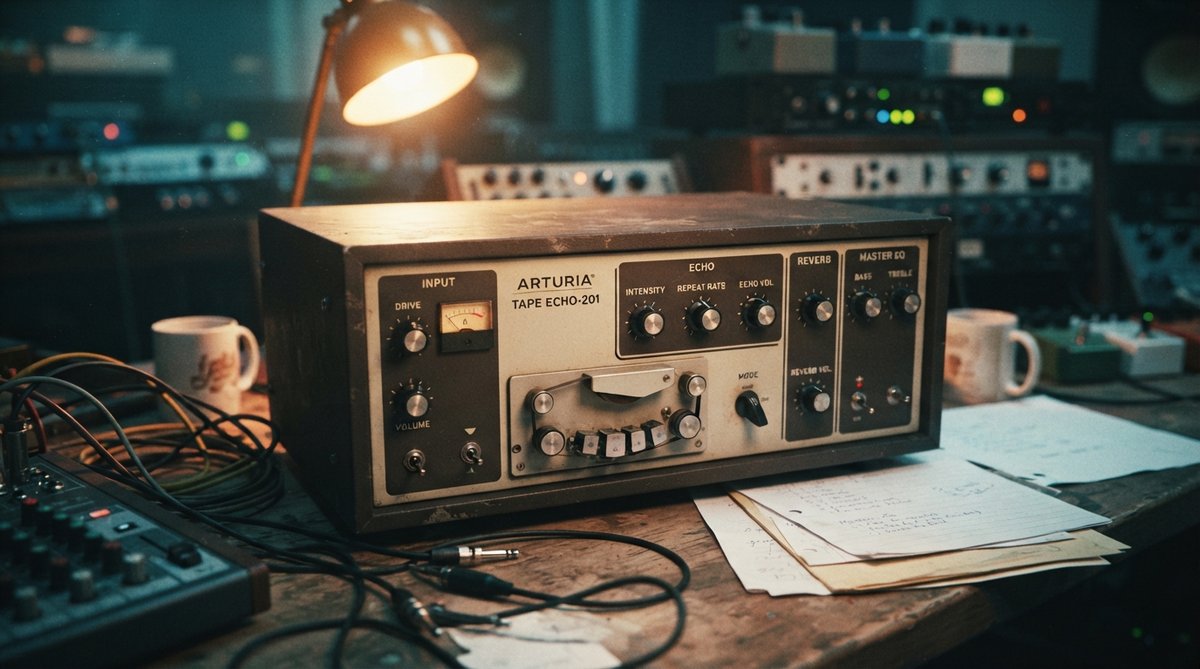
- Tape Delay: These vintage units use a continuous loop of magnetic tape. The audio signal is recorded onto the tape by a record head, and then played back by one or more playback heads positioned further along the tape. The distance between the heads and the speed of the tape determine the delay time. As the tape wears, and due to the inherent characteristics of magnetic recording, repeats naturally degrade, pick up subtle saturation, and exhibit 'wow and flutter' (slight variations in pitch and timing). This imparts a unique, organic warmth and character that is highly sought after.
- Bucket Brigade Device (BBD) Delay: Popular in pedals and early analog synthesizers, BBDs are integrated circuits that pass a charge (representing the audio signal) from one capacitor to the next, like a chain of buckets passing water. With each 'bucket' transfer, a tiny amount of high-frequency information is lost, resulting in repeats that become progressively darker and more lo-fi. This natural filtering and degradation is a hallmark of BBD delays. While primarily known for delay, BBD technology is also the core of many classic chorus effects, like our JUNI 1984 CHORUS, which uses this principle to create its rich, swirling modulation. Learn more about how BBDs create their unique sound in [LINK:the-science-of-sparkle-understanding-bucket-brigade-delay-for-analog-character].
Analog delays introduce unique imperfections and character that become an integral part of their sound, rather than flaws.
Digital Delay Architectures
Digital delays operate by converting the analog audio signal into a digital stream of data. This data is then stored in a memory buffer for a specified duration before being converted back to analog audio. The process allows for much longer delay times, pristine repeats, and incredible precision without the inherent degradation of analog systems. Early digital delays from the 1980s, while clean, often had their own distinct sonic fingerprint due to the converters and processing available at the time. Our JP-ME-1 plugin, for instance, emulates a famous 80s digital reverb, showcasing the unique sonic characteristics of that era's digital processing. You can read more about this in The Definitive Guide To 80S Digital Reverb Crafting Retro Soundscapes.
With digital delays, you can achieve crystal-clear echoes, complex rhythmic patterns, and precise sync to your song's tempo. For visual feedback on how your delay is behaving, particularly with rhythmic patterns or subtle timing shifts, a tool like Oszillos Mega Scope can be incredibly insightful. It allows you to see the waveforms of your original and delayed signals, helping you fine-tune settings with accuracy. Discover more about visual audio analysis in [LINK:unlock-the-power-of-audio-analysis-with-oszillos-mega-scope].
Digital delays offer unparalleled control and fidelity, making them versatile tools for precise and complex time-based effects.
Hybrid Approaches and Modern Plugins
Today, many delay plugins combine the best aspects of both worlds. They often use digital processing for core delay functionality, offering clean repeats and precise timing, while incorporating algorithms that emulate the characteristics of analog delays. This can include digital recreations of tape saturation, BBD-style high-frequency rolloff, or subtle modulation to mimic wow and flutter. This hybrid approach gives musicians and engineers immense flexibility, allowing them to dial in anything from pristine, rhythmic echoes to gritty, lo-fi textures within a single plugin. Even reverbs, like our RedVerb 2 with its hybrid engine, leverage digital processing to shape spatial effects and allow for precise control over parameters like pre-delay, a crucial element in creating realistic or creative spaces. Understanding pre-delay can be explored further in The Essential Guide To Reverb Pre Delay Adding Depth And Clarity To Your Mix.
Ultimately, knowing the architectural differences between delay types empowers you to make more informed creative decisions. Whether you're seeking the warm, decaying repeats of a tape echo or the pristine, rhythmic precision of a digital delay, understanding how they work helps you select the right tool for the sound you envision.