The Dawn of Digital Reverb
Before the 80s, reverb typically came from physical spaces like echo chambers or mechanical devices such as spring and plate reverbs. The arrival of affordable digital reverb processors revolutionized music production, making complex, ethereal ambiences accessible to a wider range of studios and producers. These early digital units, while advanced for their time, had a unique sound profile often described as bright, somewhat metallic, and possessing a distinctly long, often grainy decay. This sound became synonymous with the era.
Key Characteristics of the 80s Reverb Sound
When we talk about 80s reverb, several traits come to mind:
- Long, Sustained Tails: Many 80s productions featured reverbs with incredibly long decay times, often extending for several seconds, creating a wash of sound.
- Bright and Present: Unlike natural room reverbs, 80s digital reverbs often had a pronounced high-frequency content, making them sit forward in a mix rather than blending into the background.
- Gated Reverb: A hallmark of 80s drum sounds, especially snares, was gated reverb. This technique involved feeding a reverb into a noise gate, cutting off the reverb tail abruptly for a powerful, impactful sound. While not exclusive to digital units, they facilitated this effect significantly.
- Pre-Delay: Early digital units often featured adjustable pre-delay, which allowed the dry signal to pass before the reverb began, adding clarity and separation to instruments. This was crucial for maintaining intelligibility on vocals and drums amidst dense mixes.
The unique character of 80s digital reverb often comes from its bright, long, and sometimes artificial-sounding decay, which became a signature of the era.
Crafting Retro Soundscapes in Your DAW
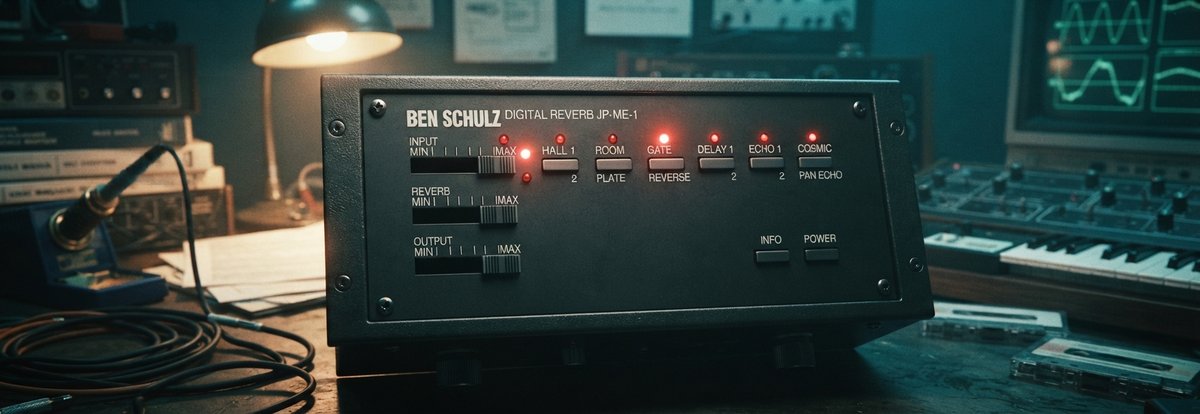
Recreating the 80s reverb sound today involves understanding these characteristics and applying them with modern tools. One excellent way to get that authentic vintage reverb tone is with a plugin specifically designed to emulate those classic units. Our JP-ME-1 plugin, for instance, emulates a famous 1980s Japanese digital reverb unit, offering twelve iconic sounds with a simple interface for instant retro nostalgia. It's built to give you those classic plate, hall, and room sounds that defined the decade.
Beyond dedicated emulations, you can also achieve similar results with versatile hybrid reverbs. RedVerb 2 allows you to load impulse responses, and with the right 80s-inspired IRs, you can dial in a convincing retro sound. Crucially, its Size and Decay knobs let you sculpt the reverb tail to be as long and expansive as those classic 80s productions. Experimenting with pre-delay is also vital; a longer pre-delay can help vocals or snare drums cut through a busy mix while still being enveloped in that signature wash. Learn more about sculpting reverb tails in Beyond The Basics Sculpting Reverb Size And Decay For Perfect Ambiance.
To get a true 80s reverb sound, focus on long decay times, a bright frequency response, and strategic use of pre-delay or gating.
Complementary 80s Effects
No 80s soundscape is complete without other period-appropriate effects. Chorus, for example, often went hand-in-hand with these reverbs. Our JUNI 1984 CHORUS provides that classic analog bucket brigade delay (BBD) chorus sound, adding width and shimmer to synths, guitars, and even vocals, just like in the mid-eighties. Pairing a rich chorus with a long digital reverb can instantly transport your tracks back in time. For more creative uses of chorus, see Beyond Synths Creative Ways To Use Chorus On Vocals Guitars Reverbs.
Understanding the interplay between these effects and the core characteristics of 80s digital reverb will empower you to create compelling retro audio effects that stand out. Whether you are producing synthwave, pop, or simply want to inject some vintage flavor into modern tracks, mastering 80s reverb is a valuable skill.