Chorus on Vocals: Adding Dimension and Presence
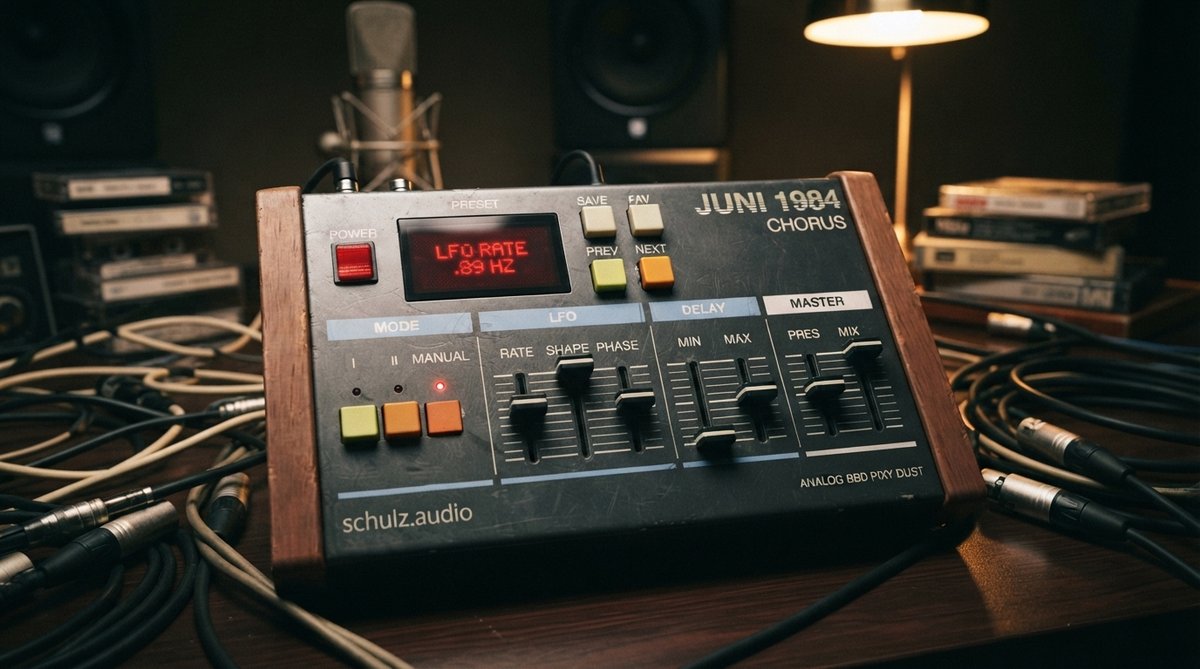
Applying a subtle chorus to vocals can create a lush, thick sound, similar to a double-tracked performance without the need for multiple takes. Start with a low Mix (wet/dry) setting, a slow Rate, and minimal Depth. This adds a gentle swirl that can help the vocal sit more prominently in the mix, giving it a wider, more ethereal quality. For a more dramatic effect, especially on backing vocals, you can increase the Depth and Rate to create a noticeable, swirling texture. Our JUNI 1984 CHORUS is perfect for imparting that analog warmth and subtle movement, making vocals feel larger than life. Remember to consider the vocal's EQ before adding modulation; a well-balanced vocal will react better to the chorus effect. For more on vocal processing, check out our article on Mastering Eq For Vocals Clarity Presence And Space.
A little chorus on a lead vocal can add a subtle, unnoticeable thickness, making it sound more expensive and polished.
Guitar Chorus: Beyond the 80s Shimmer
Guitar players have long loved chorus pedals for their ability to add shimmer to clean tones and thicken arpeggios. While the classic 80s sound is iconic, chorus can be used in more modern ways too. Try placing JUNI 1984 CHORUS on a slightly overdriven guitar to add a swirling, almost psychedelic texture, or use it on a clean, ambient guitar part to create vast, evolving soundscapes. Experiment with the chorus before or after your distortion or overdrive. Placing it before can create a more harmonically complex, detuned distortion, while placing it after will apply the modulation to the already distorted signal, resulting in a wider, more animated sustain. For exploring different guitar tones, our article on Unlocking The Magic Of Preamp Gain From Clean Warmth To Gritty Overdrive offers further insights.
Adding Dimension: Chorus on Reverbs
This is a less common but incredibly powerful technique. By placing a chorus effect after a reverb, you can transform a static reverb tail into a lush, evolving soundscape. Imagine a drum snare hit with a long reverb; adding chorus to that reverb tail makes the decay shimmer and spread, creating a sense of depth and movement that wasn't there before. This works exceptionally well with plate or hall reverbs. Try it with RedVerb 2 or even the iconic 80s sounds from JP-ME-1 and then follow it with JUNI 1984 CHORUS. Adjusting the chorus's Rate and Depth will dictate how much the reverb 'swirls'. A slow rate can make the reverb feel vast and ethereal, while a faster rate can create a more noticeable, almost watery effect. This technique can also help a reverb fill out the stereo field without simply increasing its overall volume. Learn more about shaping reverb in our articles like The Essential Guide To Reverb Pre Delay Adding Depth And Clarity To Your Mix and [LINK:crafting-immersive-soundscapes-using-reverb-for-stereo-width-and-spatial-positioning].
Placing a chorus after a reverb can turn a simple decay into a vibrant, evolving soundscape, adding depth and stereo interest.
Practical Tips for Creative Chorus Use
When experimenting with chorus, a few principles can guide you:
- Subtlety is Key: Often, the most effective chorus applications are those you don't immediately notice as 'chorus'. They simply make the sound richer and wider.
- Experiment with Placement: As discussed, placing chorus before or after other effects (like distortion or reverb) yields very different results.
- Parallel Processing: Send your signal to an auxiliary track with a chorus on it, then blend it with the dry signal. This allows you to retain the original signal's integrity while adding the chorus's character.
- Visual Feedback: Use tools like Oszillos Mega Scope to see how the waveform is modulated, or Spectrum 2 to observe changes in frequency content and stereo spread. This can help you understand the effect's impact and fine-tune your settings visually. Check out [LINK:unlock-the-power-of-audio-analysis-with-oszillos-mega-scope] and Spectrum 2 The Ultimate Multi Channel Spectrum Analyser Plug In for more on visual analysis.
Conclusion
Chorus is a powerful modulation effect that offers far more than just synth widening. By exploring its application on vocals, guitars, and even reverbs, you can unlock new creative possibilities and add depth, width, and a captivating sense of movement to your mixes. Don't be afraid to experiment with different settings and placements to discover your own unique uses for this classic effect.