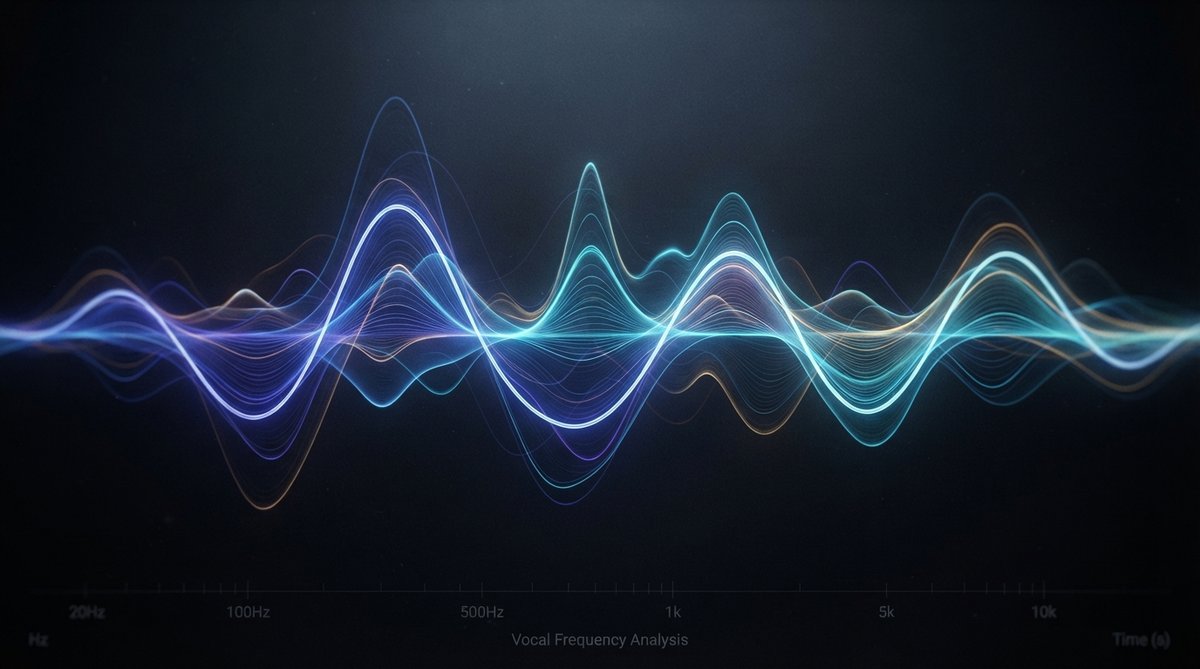
Understanding the Vocal Frequency Spectrum
Before reaching for an EQ, it helps to understand the typical frequency ranges where a vocal lives. Every voice is unique, but generally, you will find: * Sub-bass (20-60 Hz): Mostly rumble and unwanted noise, rarely useful for vocals. * Low Mids (60-250 Hz): Warmth, fullness, sometimes muddiness. * Midrange (250 Hz-2 kHz): Body, character, fundamental frequencies of speech. * Upper Mids (2-6 kHz): Presence, intelligibility, sometimes harshness. * Highs (6-20 kHz): Air, sparkle, sibilance.
Cleaning Up the Low End
Most vocals carry unwanted low-end rumble from microphones, room noise, or even proximity effect. A high-pass filter (HPF) is your first friend here. Start around 80-100 Hz and sweep upwards until the vocal starts to lose its natural warmth. You'll often find a sweet spot where the vocal sounds cleaner without becoming thin. Use a gentle slope to avoid unnatural phase shifts. For visual confirmation of these frequency issues, a tool like Spectrum 2 can be incredibly helpful to see exactly where the low-end energy is building up across multiple tracks.
A high-pass filter is crucial for removing unwanted low-end rumble, making space for other instruments and improving vocal clarity.
Adding Clarity and Definition
Clarity often resides in the lower-midrange and mid-range, but too much can lead to muddiness. Look for areas between 200 Hz and 500 Hz that might be making the vocal sound boxy or indistinct. Gentle cuts in this region can open up the sound. Conversely, subtle boosts around 1-3 kHz can bring out consonants and improve intelligibility without making the vocal harsh. Always listen in context with the full mix to ensure your vocal EQ choices contribute to the overall spectral balance of the song. The Art Of Spectral Balance How To Achieve A Professional Sounding Mix provides more insight into this concept.
Enhancing Presence and Intelligibility
For a vocal to cut through the mix, it often needs presence. This is typically found in the 2-5 kHz range. A broad, subtle boost here can help the vocal sit forward without sounding overly aggressive. Be careful not to overdo it, as this range can quickly become fatiguing. If you find certain syllables or words jump out too much, dynamic EQ or a multiband processor like OOMPH can enhance these frequencies only when needed, giving you precise control over impact and clarity without static EQ.
Taming Harshness and Sibilance
Harshness often occurs in the 3-6 kHz range, while sibilance (sharp 's' and 't' sounds) typically lives between 5 kHz and 8 kHz. For harshness, use narrow cuts to identify and reduce problematic resonances. For sibilance, a de-esser is usually the best tool, but if you're using EQ, target a narrow band with a dynamic EQ or a very precise static cut. Again, Spectrum 2 can help you visualize these piercing frequencies, making it easier to pinpoint where to apply your cuts.
Dynamic processing can be more effective than static EQ for taming harshness and sibilance, preserving the vocal's natural character.
Creating Space and Depth
Once the vocal is clear and present, you can add a sense of space. While EQ isn't directly responsible for reverb, it plays a role in how reverb sits with the vocal. Often, rolling off some highs and lows from your reverb send can prevent the vocal from sounding muddy or overly bright in the ambient space. After EQ, consider adding a tasteful reverb like RedVerb 2 or the classic 80s digital sound of JP-ME-1 to give the vocal its own natural environment. Learn more about shaping reverb in Beyond The Basics Sculpting Reverb Size And Decay For Perfect Ambiance and Algorithmic Vs Convolution Vs Hybrid Choosing The Right Reverb For Your Sound.
Final Thoughts on Vocal EQ
Vocal EQ is an art that requires careful listening and experimentation. There are no fixed rules, as every vocal and every mix is different. Always make small, precise adjustments and listen critically to how each change affects the vocal in the context of the entire song. Your goal is to make the vocal sound natural, balanced, and impactful.