The World of Reverb: More Than Just Space
At its core, reverb simulates acoustic spaces, from small rooms to vast halls. However, not all reverbs are created equal. Digital reverbs generally fall into three main categories: algorithmic, convolution, and hybrid. Each offers a unique approach to creating spatial effects, influencing everything from realism to creative sound design.
Algorithmic Reverb: The Synthesized Space
Algorithmic reverbs generate their sounds using complex mathematical equations and digital signal processing. Instead of capturing a real space, they synthesize reverb tails, early reflections, and density from scratch. This method offers immense flexibility, allowing you to create spaces that are physically impossible or highly stylized. They are often characterized by their lush, smooth, and sometimes artificial sound, making them excellent for creative effects and sound design where realism isn't the primary goal.
For example, our JP-ME-1 plugin emulates a famous 1980s digital reverb, offering twelve iconic sounds. These aren't about pristine realism but about delivering that distinct, characterful retro vibe, perfect for synths, vocals, or drums needing an authentic 80s touch. Algorithmic reverbs are generally less CPU-intensive than convolution reverbs, making them a good choice for projects with many reverb instances.
Algorithmic reverbs are your go-to for lush, synthesized spaces and creative sound design beyond the confines of physical reality.
Convolution Reverb: The Captured Space
Convolution reverbs operate by using 'impulse responses' (IRs), which are recordings of how real acoustic spaces respond to a short, sharp sound like a clap or pistol shot. When you apply a convolution reverb, it essentially 'imprints' the sonic characteristics of that captured space onto your audio. This results in incredibly realistic and detailed recreations of actual rooms, halls, plates, or spring reverbs.
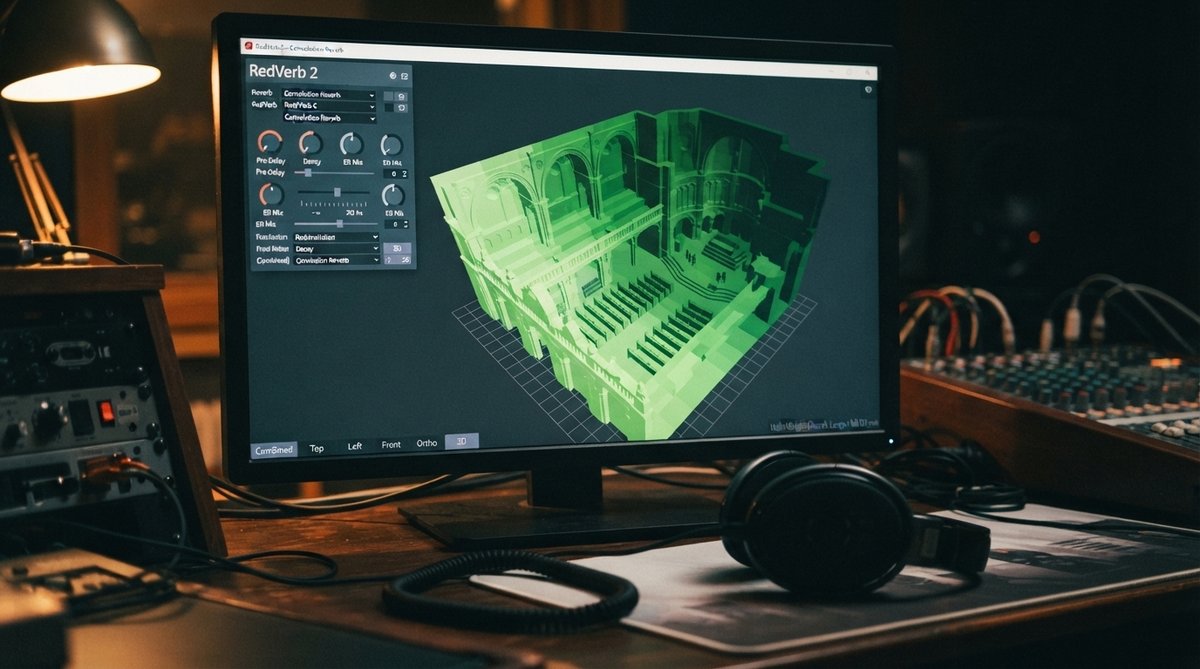
The downside is that they can be less flexible for extreme sonic manipulation compared to algorithmic types. However, plugins like RedVerb 2 bridge this gap. You can drag and drop your own IRs and then use parameters like Size and Decay to adjust the color and perceived size of the room, or tweak the Pre-delay and Spread for further sonic shaping. This lets you personalize the captured space. To learn more about these parameters, check out our articles on Beyond The Basics Sculpting Reverb Size And Decay For Perfect Ambiance and The Essential Guide To Reverb Pre Delay Adding Depth And Clarity To Your Mix.
Choose convolution reverb for unparalleled realism, accurately recreating the acoustics of specific, real-world spaces.
Hybrid Reverb: The Best of Both Worlds
Hybrid reverbs combine elements of both algorithmic and convolution processing. This approach seeks to marry the realism and detail of impulse responses with the creative flexibility and parameter control of algorithmic engines. Often, a hybrid reverb might use convolution for the early reflections and then an algorithmic engine for the dense, evolving reverb tail, or it might allow for deep algorithmic manipulation of a convolution engine's core characteristics.
Our RedVerb 2 is a prime example of a versatile hybrid reverb. Its unique engine allows for precise adjustment of sonic aspects beyond what a traditional convolution reverb might offer, giving you the best of both realism and creative control. This makes it suitable for a wide range of applications, from subtle room ambiance to expansive, experimental soundscapes.
Choosing Your Reverb: A Practical Approach
When deciding which reverb to use, consider your primary goal:
- For realism and natural spaces:Convolution reverb excels at accurately placing instruments in a believable acoustic environment. Think orchestral recordings or foley.
- For creative sound design and stylized effects:Algorithmic reverb offers more freedom to sculpt fantastical or otherworldly spaces, add shimmer, or create washes of sound. Great for electronic music, cinematic scores, or unique vocal effects.
- For flexibility and a balance of realism and control:Hybrid reverb provides a powerful toolset, allowing you to fine-tune realistic spaces or inject character into an IR that might otherwise be static. It offers a broader palette for modern mixing and sound design.
Experiment with different types on various sources. A vocal might benefit from a lush algorithmic plate, while a drum bus could shine with a realistic convolution room. Don't be afraid to layer different reverb types or automate parameters for dynamic and evolving textures in your mix.