The Heart of Your Guitar's Voice
At its core, a guitar pickup is a transducer. It consists of magnets wrapped with coils of wire. When a metal string vibrates over these magnets, it disrupts the magnetic field, inducing a small electrical current in the coil. This current, a tiny analog representation of your string's movement, is then sent to your amplifier and effects. The type of magnets, the number of coil windings, and the overall construction all play a crucial role in the sound you hear.
Passive Pickups: The Traditional Sound
Passive pickups are the most common type, relying solely on the interaction between the magnets and coils to generate their signal. They don't require external power, giving them a direct, organic feel.
Single-Coil Pickups
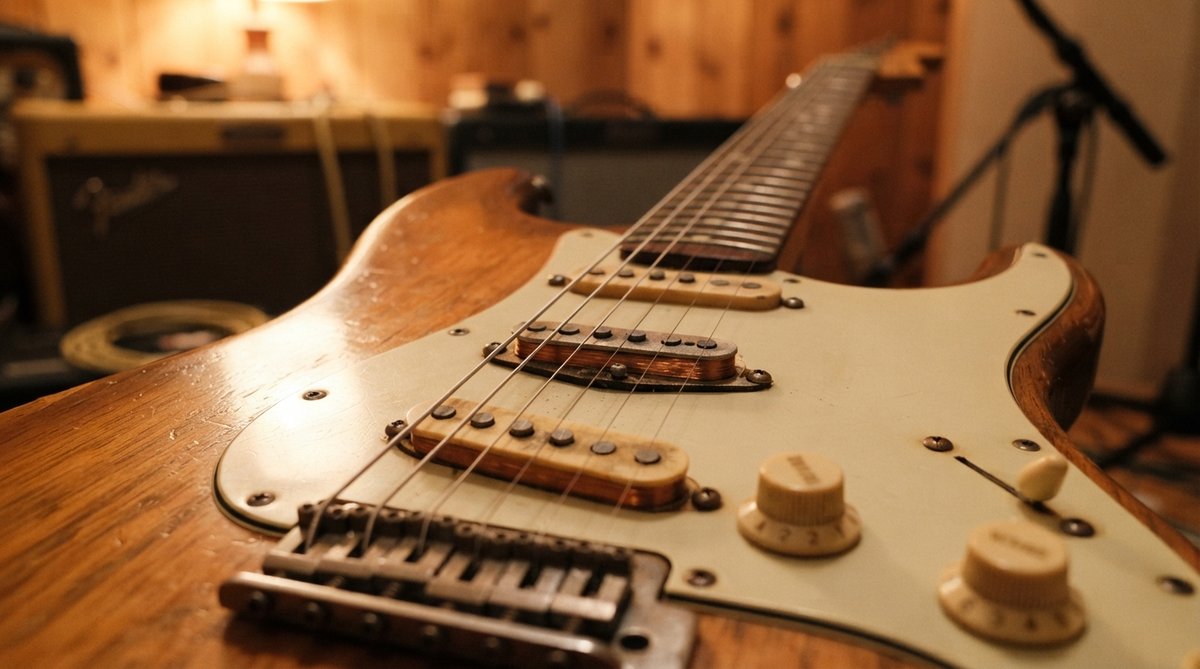
Single-coil pickups, found famously in Fender Stratocasters and Telecasters, feature a single coil of wire. They are known for their bright, clear, and articulate sound, often described as 'chimey' or 'glassy.' They offer excellent note separation and a wide dynamic range, responding well to subtle playing nuances. However, their single-coil nature makes them susceptible to electromagnetic interference, resulting in a characteristic 60-cycle hum.
Single-coil pickups deliver bright, articulate tones with a distinct clarity, though they can introduce a noticeable hum.
Humbucker Pickups
Invented to combat the hum of single-coils, humbuckers use two coils wired out of phase. This design cancels out the noise (hence 'hum-bucker') while also producing a fatter, warmer, and higher-output sound. They are staples in Gibson Les Pauls and many rock guitars. Humbuckers tend to have a smoother top end, a more pronounced midrange, and a thicker low end, making them ideal for distorted tones and sustaining notes. They often sound less 'airy' than single-coils but offer greater power and sustain.
Humbuckers provide a warm, thick, and powerful tone with significantly reduced noise.
Active Pickups: Power and Precision
Active pickups incorporate a small, battery-powered preamp directly into the pickup housing. This preamp boosts the signal, providing a much higher output and a lower noise floor compared to passive pickups. They often use weaker magnets and fewer coil windings, which results in a different tonal character: typically more compressed, focused, and with extended frequency response. Active pickups are popular in metal and other high-gain genres due to their clarity under heavy distortion and consistent output, even with long cable runs. Their compressed nature can sometimes feel less dynamic than passive pickups, but this can also be an advantage for certain styles.
Impact on Tone and Genre
The choice of pickup significantly influences your guitar's voice and its suitability for different musical styles. Single-coils excel in blues, country, funk, and surf rock where clarity and brightness are key. Humbuckers dominate rock, metal, jazz, and heavier blues, providing the warmth, sustain, and output needed for these genres. Active pickups are a go-to for modern metal, shred, and progressive genres where extreme clarity, tight low end, and high gain are paramount. When exploring different gain stages, understanding your pickup's output and character is essential. A high-output humbucker will hit an overdrive pedal or amp input much harder than a vintage-style single-coil, leading to more immediate saturation. You can explore these interactions with plugins like Schulz Tonebreaker, which faithfully recreates classic British blues overdrive, or Schulz PortaCrunch 424 for gritty overdrive and saturated fuzz tones. For more on shaping your gain, read our article on Unlocking The Magic Of Preamp Gain From Clean Warmth To Gritty Overdrive.
Beyond the pickups themselves, the rest of your signal chain further sculpts the sound. Amp simulators and cabinet modeling can drastically alter the final output, allowing you to achieve a wide array of studio-quality guitar tones directly in your DAW. For a deeper dive into these tools, check out Demystifying Amp Simulators How To Get Studio Quality Guitar Tones Without An Amp.