The Missing Link: Beyond Amp Sims
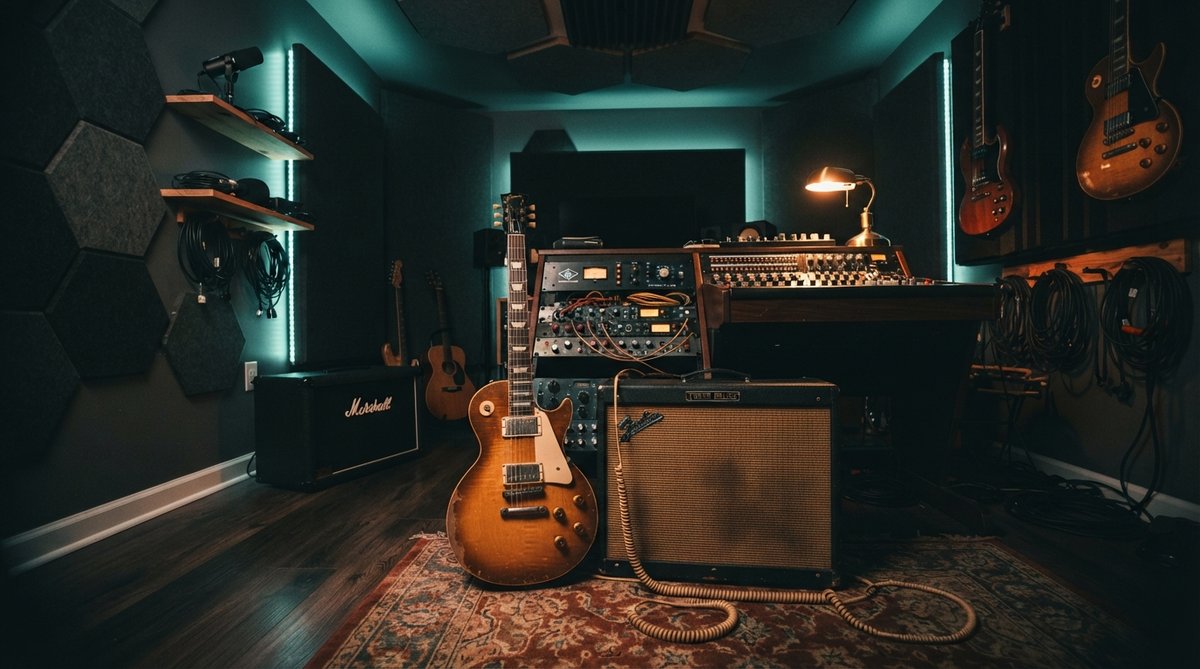
Modern amp simulation plugins have become incredibly sophisticated, faithfully recreating the nuances of classic amplifiers and speaker cabinets. However, even with the best amp and cab simulations, a guitar track can sometimes still sound a bit 'DI' or sterile, lacking the natural depth and dimension of a mic'd amplifier in a real space. This is where amp room modeling comes in, addressing the crucial element often overlooked: the acoustic environment.
The virtual recording space is as vital to a realistic guitar tone as the amp and cabinet themselves.
What is Amp Room Modeling?
Amp room modeling is a specialized form of virtual acoustics designed to simulate how a guitar speaker interacts with a specific physical room. Unlike a general reverb effect that adds an artificial sense of space, amp room modeling aims to capture the early reflections, decay characteristics, and resonant frequencies that occur when a loud sound source like a guitar cabinet excites a room.
This process often involves using advanced convolution techniques or algorithmic simulations that are specifically tailored to the physics of a speaker in a room, rather than just applying a generic hall or plate reverb. It simulates the subtle echoes, the way sound bounces off walls and ceilings, and how those reflections arrive at a virtual microphone position, creating a cohesive and believable soundstage for your guitar.
Crafting Your Virtual Studio Space
Many sophisticated amp simulation plugins, like the Schulz Tonebreaker, integrate amp room modeling directly into their signal chain. This allows you to not only select your amp and cabinet but also define the characteristics of the virtual space they're in. Parameters often include virtual room size, material characteristics, and crucially, the placement of the virtual microphone within that room relative to the speaker cabinet.
Adjusting these parameters has a profound effect on your realistic guitar tone. A smaller, tighter room might give you a punchier, more direct sound, while a larger room introduces more natural ambience and decay. Experimenting with virtual mic positions, such as closer to the speaker for more direct sound or further away to capture more room tone, lets you sculpt the soundstage and overall realism. This level of control helps you move beyond the flat sound of a dry amp sim to a sound that feels 'in the room' and alive. To learn more about getting great tones from amp sims, check out our article on Demystifying Amp Simulators How To Get Studio Quality Guitar Tones Without An Amp.
Integrating Amp Room Modeling into Your DAW Workflow
When using amp room modeling, it's generally best to place it after your amp and cabinet simulation in the signal chain, as it's simulating the sound of the already amplified and speaker-processed signal interacting with the room. The goal is often subtlety; you want the room to enhance the guitar, not drown it in reverb.
For broader, more generalized room ambiance or specific character, you might still use a dedicated reverb plugin. For instance, RedVerb 2 allows you to load and tweak impulse responses, which can include detailed room acoustics, giving you further control over the perceived space. For a touch of retro flavor, the JP-ME-1 delivers iconic 80s digital reverb sounds that can add a different kind of spatial character, though it's not strictly 'amp room modeling'. If you want to dive deeper into reverb techniques, explore Beyond The Basics Sculpting Reverb Size And Decay For Perfect Ambiance and Algorithmic Vs Convolution Vs Hybrid Choosing The Right Reverb For Your Sound.
The Impact on Realistic Guitar Tone
By thoughtfully implementing amp room modeling, you add a layer of depth and dimension that makes your DAW guitar productions sound significantly more professional and authentic. It helps glue the guitar into the mix, giving it a natural sense of space and presence. The subtle reflections and ambient cues provided by virtual acoustics create a believable soundstage, transforming a dry, processed guitar into one that feels like it was recorded in a meticulously crafted studio environment.