Understanding Saturation's Role
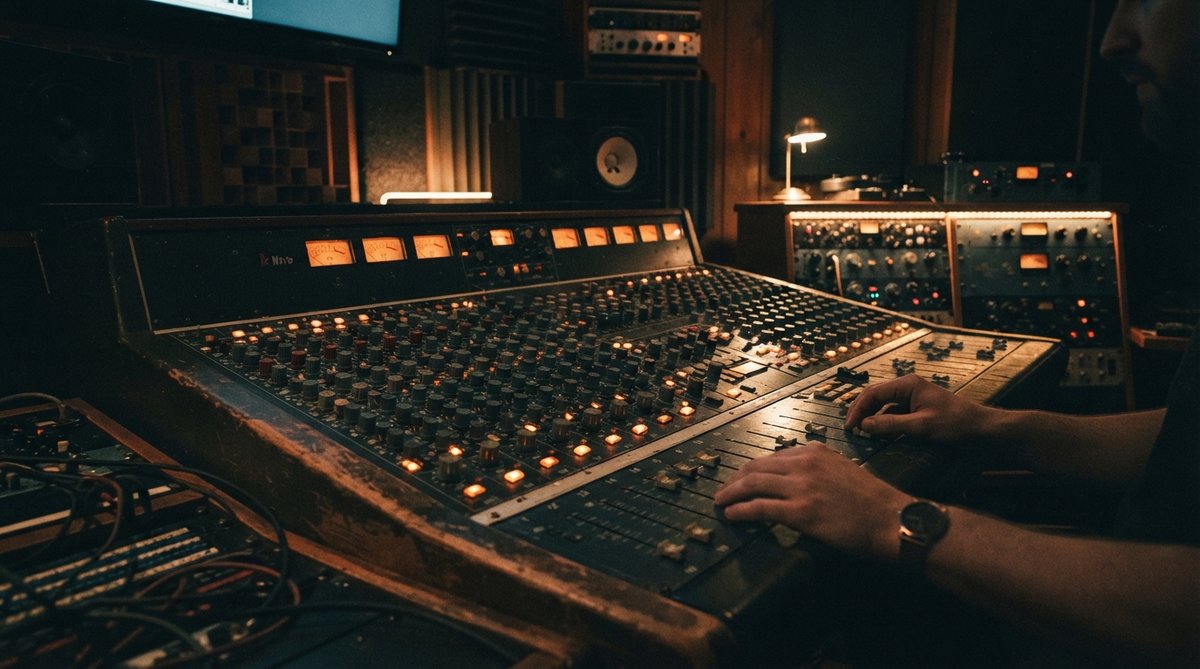
At its core, saturation introduces subtle harmonic distortion, which can increase perceived loudness, add warmth, and gently compress the signal. Different types of saturation, from tube and tape emulation to transistor drive, impart distinct flavors. Each type offers a unique way to shape the sound, making an instrument feel more 'present' or 'analog'.
Bass: Adding Weight and Definition
For bass, saturation is a powerful tool to help it cut through a dense mix without simply turning up the volume. By introducing upper harmonics, saturation allows the bass to be heard more clearly on smaller speakers, adding definition and growl. A little goes a long way, transforming a flat bassline into something rich and vibrant.
Saturation adds crucial upper harmonics to bass, helping it translate better across all playback systems.
You can use subtle warmth to thicken a clean bass or push into aggressive overdrive for a more distorted, impactful sound. Plugins like Schulz PortaCrunch 424 excel at this, offering everything from a rich, colorful clean tone to gritty overdrive and saturated fuzz, all of which shine on bass. Experiment with parallel processing: send your bass to an auxiliary track, saturate it heavily there, and then blend it back with the clean signal. This technique gives you the best of both worlds: clarity and grit.
When applying saturation to bass, it's wise to monitor your low-end carefully. Tools like Oszillos Mega Scope can help you visualize waveform changes, while Spectrum 2 allows you to see the added harmonic content and ensure you are not creating unwanted frequency build-up. For more on visual analysis, check out Oszillos Mega Scope Multi Channel Audio Oscilloscope Plug In and Spectrum 2 The Ultimate Multi Channel Spectrum Analyser Plug In.
Drums: Punch, Glue, and Character
Saturation on drums can add punch, sustain, and an overall sense of cohesion. On individual drums, it can make a kick drum thump harder, give a snare more crack, or add sizzle to hi-hats. On the drum bus, it acts as a 'glue,' subtly compressing and harmonically enriching the entire kit, making it sound more unified.
Use saturation on drums to enhance transients, add sustain, and create a more cohesive, impactful kit sound.
For a vintage, warm drum sound, try a tape-style saturation or a preamp emulation like Schulz PortaCrunch 424 on your drum bus. This can impart a subtle compression and harmonic richness that makes the drums feel more 'real' and less sterile. For more targeted enhancement, a multiband dynamic enhancement tool like OOMPH allows you to apply saturation to specific frequency ranges, adding punch to the low-mids of a kick or clarity to the high-mids of a snare without affecting other parts of the spectrum. For more on achieving a vintage sound, see How To Get That Authentic Cassette Tape Sound In Your Daw.
Creative overdrive can also transform drums. Try heavily distorting a room mic or a parallel drum bus for a huge, aggressive sound. Blended subtly, this can add an exciting edge and depth to your drum mix.
Synths: From Subtle Sheen to Aggressive Edge
Digital synthesizers often benefit immensely from saturation, which can imbue them with an analog warmth, character, and perceived depth. A synth pad can gain a beautiful sheen, a lead can become more assertive, and a bass synth can achieve a powerful, growling presence that fills out the low end.
Saturation can transform digital synths, adding analog warmth, harmonic richness, and a powerful character.
Applying a touch of saturation can make a thin-sounding synth feel much larger and more substantial by adding harmonic overtones that weren't originally present. Schulz PortaCrunch 424 can be particularly effective here, taking a sterile digital synth and giving it the kind of colorful, gritty character reminiscent of classic hardware. Whether you want a subtle, vintage warmth or a more pronounced, aggressive edge, the right saturation can redefine your synth sounds.
Consider using saturation on synth leads to help them cut through a mix, or on pads to give them a rich, evolving texture. Even subtle amounts can make a huge difference, adding a sense of 'expensive' quality to your synth sounds. Explore the nuances of preamp gain in Unlocking The Magic Of Preamp Gain From Clean Warmth To Gritty Overdrive for more ideas.
Tips for Effective Saturation
Remember to use your ears. Saturation is a creative tool, not a one-size-fits-all solution. Always listen in context with the rest of your mix to avoid overdoing it, which can lead to muddiness or harshness. Parallel processing is often your best friend, allowing you to blend the saturated signal with the dry one for maximum control.
Consider EQing before and after your saturation plugin. Sometimes, filtering out some low-end before saturation can prevent muddiness, while a gentle high-shelf boost after can enhance the added harmonics. Using visual analysis tools like Oszillos Mega Scope and Spectrum 2 can also help you understand how saturation is affecting your signal, especially in the low and high frequencies. This helps maintain a balanced mix, as discussed in The Art Of Spectral Balance How To Achieve A Professional Sounding Mix.